Sports Chiropractic Care & Treatment for Foot Pain in Excelsior, MN
Lake Minnetonka area’s Foot Pain Specialists
Your foot is an absolute engineering masterpiece.
(Yeah, I nerd out on this stuff.)
Twenty-six bones. Thirty-three joints. Over 100 muscles, tendons, and ligaments either directly or indirectly influencing how you walk, run, squat, jump, and absorb force.
Woah.
So when your foot starts barking at you? It’s probably not random.
At Minnesota Movement Chiropractic & Sports Rehab in Excelsior, we commonly see athletes and active adults dealing with heel pain, Plantar Fasciitis, pain associated with dropped/collapsed arches, Achilles tendonitis or tightness, pain in the ball of the foot, toe pain, ankle stiffness, and even numbness or burning sensations — often without a major injury ever occurring.
The reality is that most foot injuries happen slowly over time. Poor gait mechanics. Weak intrinsic foot muscles. Collapsed arches. Limited ankle mobility. Overtraining. Bad footwear. Compensation patterns from the hip or knee. Eventually your body hits a threshold. Suddenly that “minor annoyance” becomes “why does it hurt to walk barefoot to the kitchen?”
Our Sports Chiropractors are some of the best in the Lake Minnetonka area. We specialize in identifying why your foot became painful in the first place - not just temporarily calming symptoms down.

The Foot is built like a Tripod.
Yep. Your foot actually has three major arches:
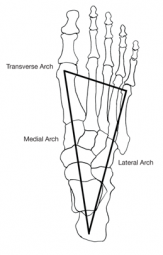
Medial longitudinal arch (heel → big toe)
Lateral longitudinal arch (heel → pinky toe)
Transverse arch (across the forefoot from big toe → pinkie toe)
Together, these create a stable yet mobile “tripod” capable of ‘squishing’ with every step or jump and thus absorbing force and producing power.
If one portion becomes too stiff, too weak, or overloaded, problems start showing up elsewhere. That ground force absorption has to go somewhere, right?
Plantar fasciitis
Shin splints
Bunions
Even recurring ankle sprains
Which is why stretching your calves for 30 seconds while hoping for the best usually doesn’t cut it.
Common Symptoms we treat for Foot Pain
Heel pain first thing in the morning (whether this is related to the achilles insertion or plantar fasciitis)
Sharp pain on the top of the foot or toes when walking barefoot
Burning or searing pain in the arch
Pain while running or after workouts
Tight calves or Achilles tendon
Cramping in the feet
Pain in the ball of the foot
Numbness or tingling in the toes
Big toe stiffness such as bunion pain
Recurrent ankle sprains
Foot fatigue while standing
Pain after pickleball, golf, hockey, CrossFit, or running
Recovery Expectations & Prognosis
Most mild-to-moderate foot issues improve significantly within:
2–4 weeks for minor irritation or acute flare-ups
6–8 weeks for tendon-related injuries
8–12+ weeks for chronic plantar fasciitis or longstanding gait dysfunction
The earlier you address the issue, the faster recovery tends to be.
Chronic cases usually aren’t “harder” because they’re severe - they’re harder because your body has spent months or years reinforcing compensation patterns.
Simple Rehab Exercises We Commonly Prescribe
Short Foot Exercise Improves arch stability and intrinsic foot strength.
Calf Raises with Slow Eccentric Lowering Excellent for Achilles tendon health and force absorption.
Toe Yoga / Toe Spreading Improves foot control and balance.
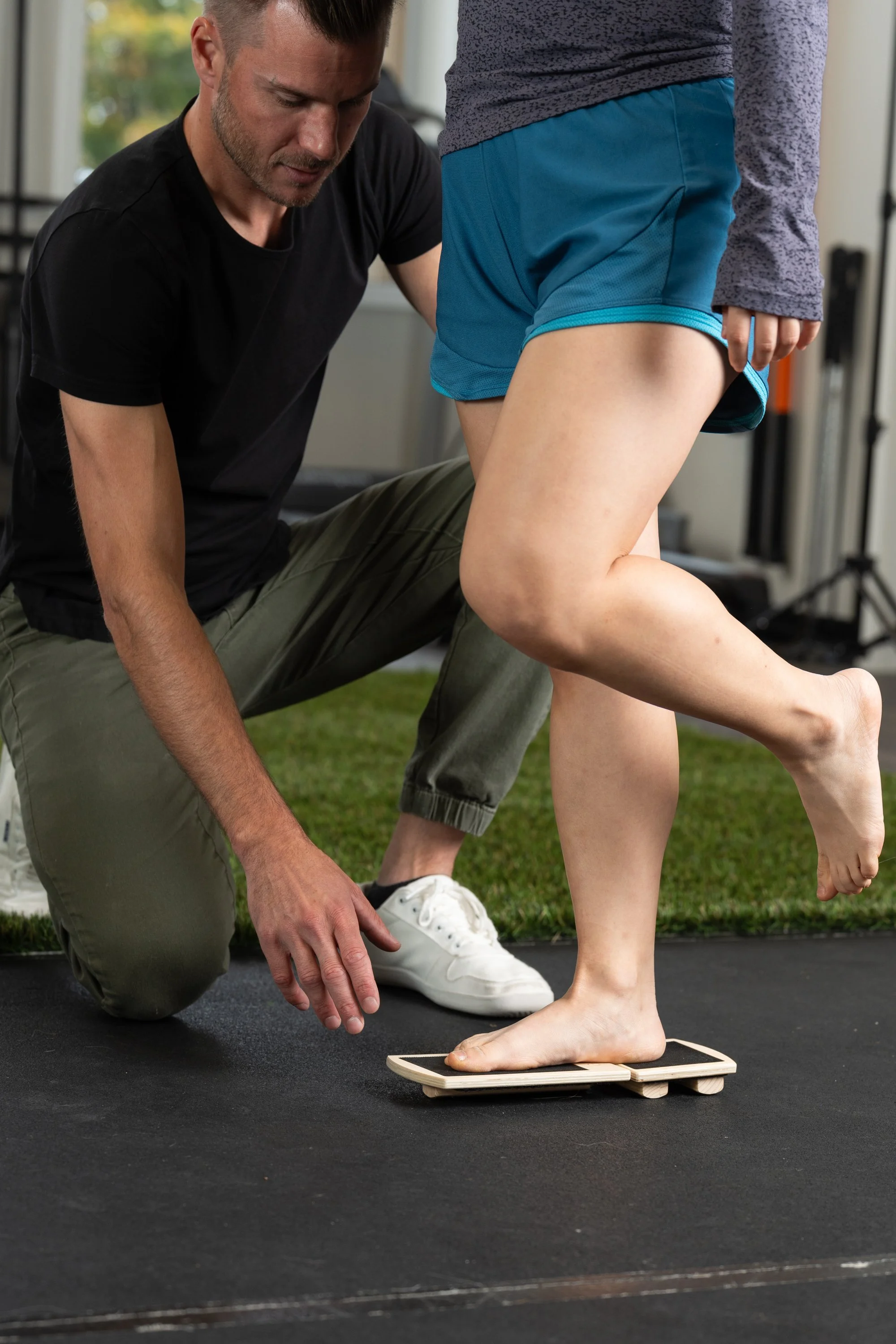
Dynamic Balance The foot needs to be stable so that we can dynamically load the rest of the system.
Frequently Asked Questions (FAQ)
1. What does Plantar Fasciitis feel like?
Usually sharp heel pain first thing in the morning or after sitting. Many people describe it as “walking on a nail” when barefoot.
How it happens:
Overloading the plantar fascia through poor gait mechanics, weak feet, calf tightness, or overtraining.
What to expect:
Most cases improve within 6–10 weeks with proper treatment and rehab.
2. What’s the difference between Achilles Tendonitis and Plantar Fasciitis?
Achilles tendonitis causes pain in the back of the heel or lower calf, especially during running or jumping.
Plantar fasciitis is more commonly felt on the bottom of the heel or arch.
3. Why do my feet hurt after standing all day?
Often due to poor load distribution, weak foot muscles, poor footwear, or compensation patterns higher up the chain.
This is extremely common in nurses, teachers, warehouse workers, and corporate professionals.
4. What is Morton’s Neuroma?
A thickening or irritation of a nerve between the toes causing:
Burning pain
Tingling
Feeling like there’s a pebble in your shoe
Often aggravated by narrow shoes or repetitive forefoot loading.
5. Why do I keep rolling my ankle?
Most chronic ankle sprains aren’t just “bad luck.”
They’re usually associated with:
Poor balance/proprioception
Weak stabilizers
Limited ankle mobility
Poor foot control
If untreated, they frequently lead to chronic instability and recurring injuries.

Common Causes of Foot Pain
Overuse & Training Errors
Too much mileage, too little recovery, sudden increases in activity, or repetitive loading patterns.
Poor Footwear
Worn-out shoes, overly cushioned shoes, narrow toe boxes, or shoes that don’t match your gait mechanics.
Limited Ankle Mobility
If the ankle doesn’t move well, the foot is forced to compensate. Classic chicken vs. egg conversation.
Flat Feet or Collapsed Arches
Excessive pronation can overload the plantar fascia, Posterior Tibialis or Achilles tendons, and even the medial knee.
High Arches
Often associated with poor shock absorption. Especially bothersome when the arch is ‘stuck’ in a high, rigid position.
Weak Intrinsic Foot Muscles
Your foot has small stabilizing muscles that act like a built-in suspension system. Most people never train them.
Compensation Patterns
Hip weakness, knee instability, pelvic positioning, or poor core control frequently create downstream foot issues.

Foot & Gait Assessment at Minnesota Movement
If we’re not assessing we’re just guessing.
Our providers perform detailed movement and gait evaluations to understand why your symptoms started.
Your assessment may include:
Walking and running gait analysis on treadmill
Pedograph pressure mapping of the foot
Pronation vs. supination assessment
Squat and lunge movement screening
Single-leg stability testing
Ankle mobility assessment
Manual evaluation of muscles, tendons, ligaments, and joints
Footwear analysis and shoe recommendations
Fun Fact:
Dr. Reid spent 3 years training alongside nationally recognized gait and foot specialist Dr. Courtney Conley in Colorado — experience that heavily influences how we approach foot pain and performance here at Minnesota Movement in Excelsior.

Sports Chiropractic Treatment for Foot Pain
Chiropractic Extremity Adjustments
Mobilizing stiff joints in the foot, ankle, knee, or hip to improve mechanics and load distribution.
Functional Dry Needling
To alleviate tightness or tautness in wound up tissues such as muscles or tendons of the foot, ankle, and lower leg.
Manual Muscle Therapy
Hands-on treatment to reduce muscular guarding and improve tissue quality.
Active Release Technique (ART)
Targeted soft tissue work for scar tissue, adhesions, and chronic tension patterns.
Instrument Assisted Soft Tissue Mobilization (IASTM)
Using RockBlades/Graston tools to improve tissue healing and mobility.
Corrective Exercise & Gait Retraining
Probably the most important piece long-term. We retrain movement patterns so symptoms don’t keep returning.
Barefoot Strengthening & Foot Stability Training
Improving intrinsic foot strength, balance, and force absorption.
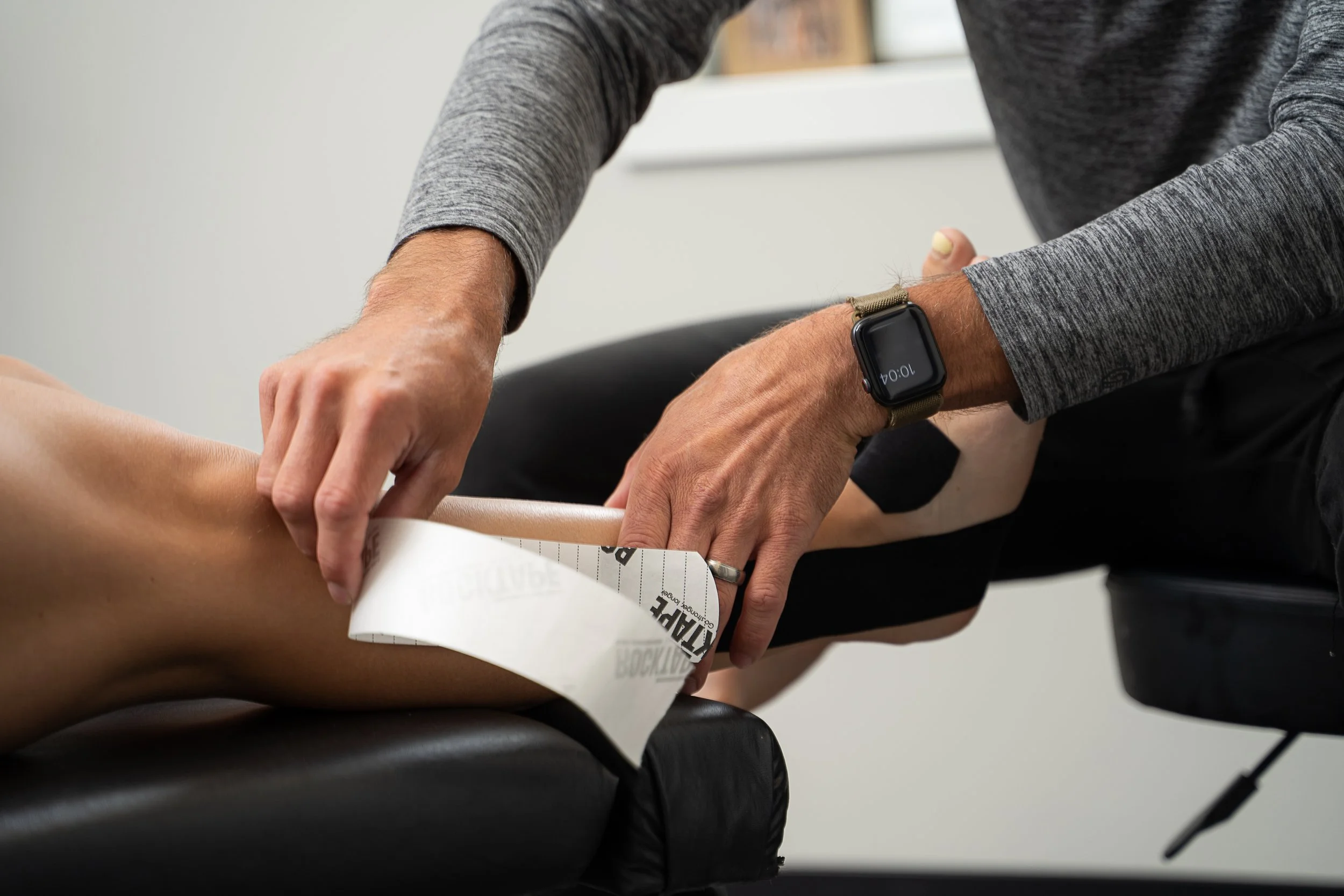
RockTape Kinesiology Taping
Helpful for offloading painful tissues and improving movement awareness.
Orthotic, Toe Spacers, or Forefoot Posting Recommendations
Very Specific and custom made inserts only when warranted - not as a lazy “everybody gets inserts” approach.
Common Foot Conditions We Treat
Plantar Fasciitis
Achilles Tendonitis / Tendinopathy
Flat Feet
High Arches
Bunions
Metatarsalgia
Morton's Neuroma
Turf Toe
Ankle Sprains
Shin Splints
Stress Reactions / Stress Fractures
Haglund’s Deformity
Sever’s Disease
Tendinitis / Tendinosis
Arthritis
Toe Pain & Joint Restriction
Running-Related Foot Pain
Pickleball Foot & Ankle Injuries
Don’t Wait Until Foot Pain Changes How You Move
The longer foot pain sticks around, the more compensation patterns your body builds around it.
If you’re dealing with heel pain, Plantar Fasciitis, Achilles tightness, arch pain, ankle instability, or pain while running, our team at Minnesota Movement Chiropractic & Sports Rehab in Excelsior is here to help! Book your Session or Complimentary Consultation TODAY!
Google Review Testimonial:
“I started seeing Minnesota Movement for a bad case of plantar fasciitis. I had it for several months before I realized what it was and started working with their providers, so recovery was understandably a long process. We worked through running form, muscle imbalances, and appropriate training as well as shoe modifications. I’m happy to say that my foot pain is under control now, and I’m able to exercise as I want - but more effectively.”
- Deb B. - Chanhassen, MN