
Sports Chiropractic Care & Rehab for Hip Pain
Minnesota Movement | Lake Minnetonka | Excelsior, MN
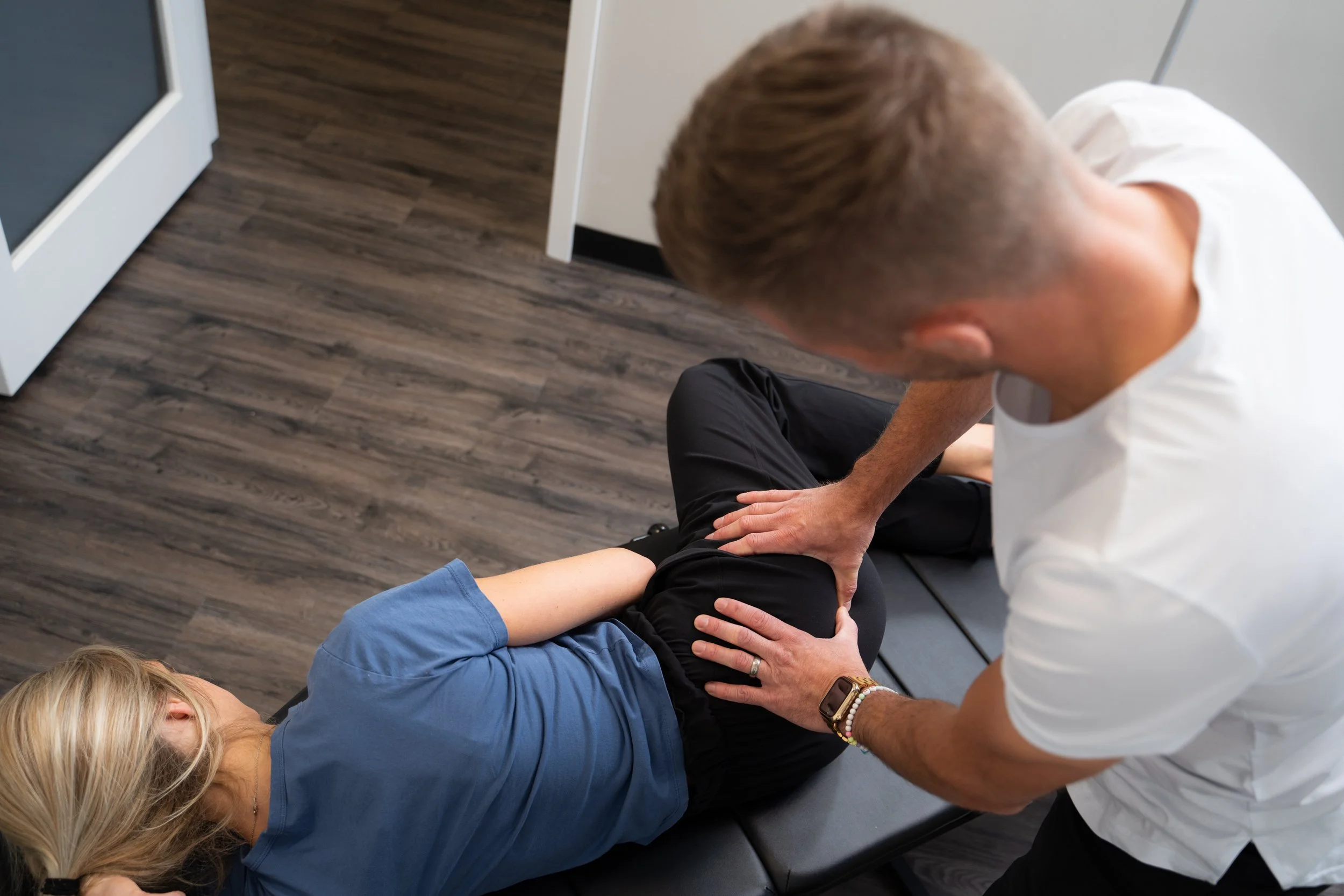
Hip pain is one of the most common—and most misunderstood—issues we treat at Minnesota Movement. In today’s sit-more, move-less culture, hip dysfunction isn’t about age or mileage alone. It’s about imbalance, compensation, and poor load management over time.
When you sit all day, the glute muscles shut down while your hip flexors and quads take over. That imbalance is a fast track to chronic hip pain, poor performance, and eventually injury. Stretching alone won’t fix that. Rest won’t either. You need a plan.
Why Hip Pain Happens (and Why It Keeps Coming Back)
The hip is a highly mobile ball-and-socket joint designed to generate power, absorb force, and move through large ranges of motion. When mobility or control breaks down—whether from prolonged sitting, repetitive sport demands, or poor mechanics—the body creates a false sense of stability through muscle tension. That’s why hips often feel “tight” even when they actually need better mobility and strength, not just stretching.
Common mechanisms we see clinically:
Prolonged sitting and sedentary work
Asymmetrical sports (golf, tennis, pickleball)
Running and CrossFit volume without recovery
Poor core or pelvic control
Compensation from low back, knee, or ankle issues

Common Symptoms of Hip Dysfunction and Pain
Deep groin pain or pinching
Lateral hip pain when sleeping on one side
Pain with squatting, lunging, or running
Stiffness after sitting or driving
Clicking, popping, or snapping sensations
Loss of power or speed during training
Sports Chiropractic Treatment for Hip Pain
When stretching and rest aren’t enough, we take a different approach.
Treatment may include:
Active Release Technique (ART) to assist in guiding pain free range of motion
Functional Dry Needling in order to help stimulate healing of tendon tissues and mitigate muscular tightness/tautness
Manual Muscle Therapy to ease muscular tension or provide necessary mobility
Extremity Adjustments to the hip, knee, ankle, and foot
RockTape for neuromuscular feedback
Gait re-training and movement analysis
Corrective Exercise Rehab to restore and improve muscular firing patterns and to increase performance tolerance
Common Hip Conditions We Treat
Hip Labral Tear
Common symptoms: Deep groin pain, catching, clicking, pain with pivoting or deep squats. Often associated with repetitive rotation sports or structural impingement as this puts extra strain on the Labrum.
Muscle Strain (Hip Flexor, Adductor, Hamstring)
Common symptoms: Sharp pain during sprinting, kicking, or lunging; tenderness and weakness. Often due to overload or fatigue without adequate recovery.
Snapping Hip Syndrome
Common symptoms: Audible or palpable snapping with movement, often painless at first. Usually caused by muscular or tendon irritation—not a joint issue.
Hip Bursitis
Inflammation of protective fluid-filled sacs around the hip.
Trochanteric bursitis: Lateral hip pain, worse when lying on the side
Iliopsoas bursitis: Front-of-hip pain with lifting the leg or stairs
Ischial bursitis: Pain when sitting, especially on hard surfaces
Hip Tendinitis / Tendinopathy
Common symptoms: Achy pain with activity that improves with movement but worsens afterward. Often linked to poor load tolerance and movement inefficiency.
Hip Osteoarthritis
Common symptoms: Stiffness, loss of range of motion, deep ache with prolonged activity. Early-stage arthritis often responds extremely well to conservative care.
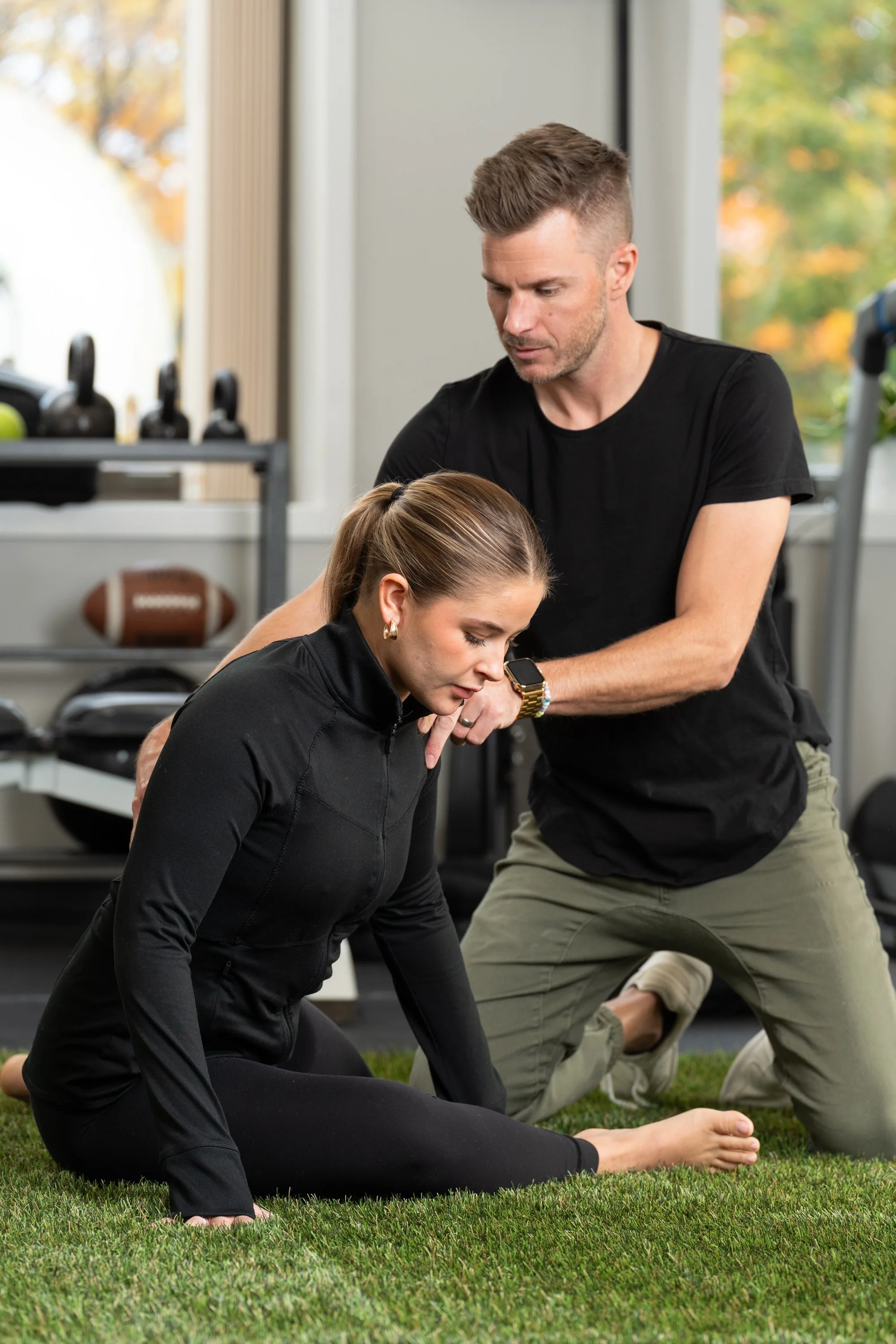
Femoroacetabular Impingement (FAI) Explained
Not all impingement is structural - nor are they all created equal. Which means we need to assess, treat, and rehabilitate them all differently as well.
Muscular Impingement
Caused by restricted soft tissue, poor control, or guarding. Highly responsive to rehab.
Structural Impingement
Cam Impingement: Extra bone on the femoral head; pain with flexion and rotation
Pincer Impingement: Extra bone on the acetabulum; pinching at end ranges
Many athletes with imaging-confirmed FAI find results and pain-free relief when movement patterns are corrected.
Recovery Timeline & Prognosis for Generalized Hip Pain Conditions:
Mild strains or movement-related pain: 2–4 weeks
Tendinopathy or bursitis: 4–8 weeks
Chronic or structural issues: 8–12+ weeks, depending on consistency
Most patients feel relief early. Long-term success comes from restoring strength, control, and confidence.
If hip pain is limiting your training, your golf swing, or your day-to-day life - you deserve to feel better! Let’s fix it together.
Book a sports chiropractic hip assessment at our Excelsior clinic today.
Real Patient Success Story:
“Dr. Reid takes the time to listen and make sure he has addressed all my concerns. After years of lingering hip pain, I have been pain free since being treated by him. Each session, he takes care of my back, knees and feet issues and I’m seeing significant improvement as the highly beneficial strengthening exercises are tailored to my needs. Thanks to Dr. Reid, I’m able to keep my active life style: trampoline, line dancing, biking, hiking and so much more!”
- Gundula B. | Shorewood, MN