
Sports Chiropractic Treatment & Rehab for Labral Tears
Hip & Shoulder Labral Tear Treatment in Excelsior, MN
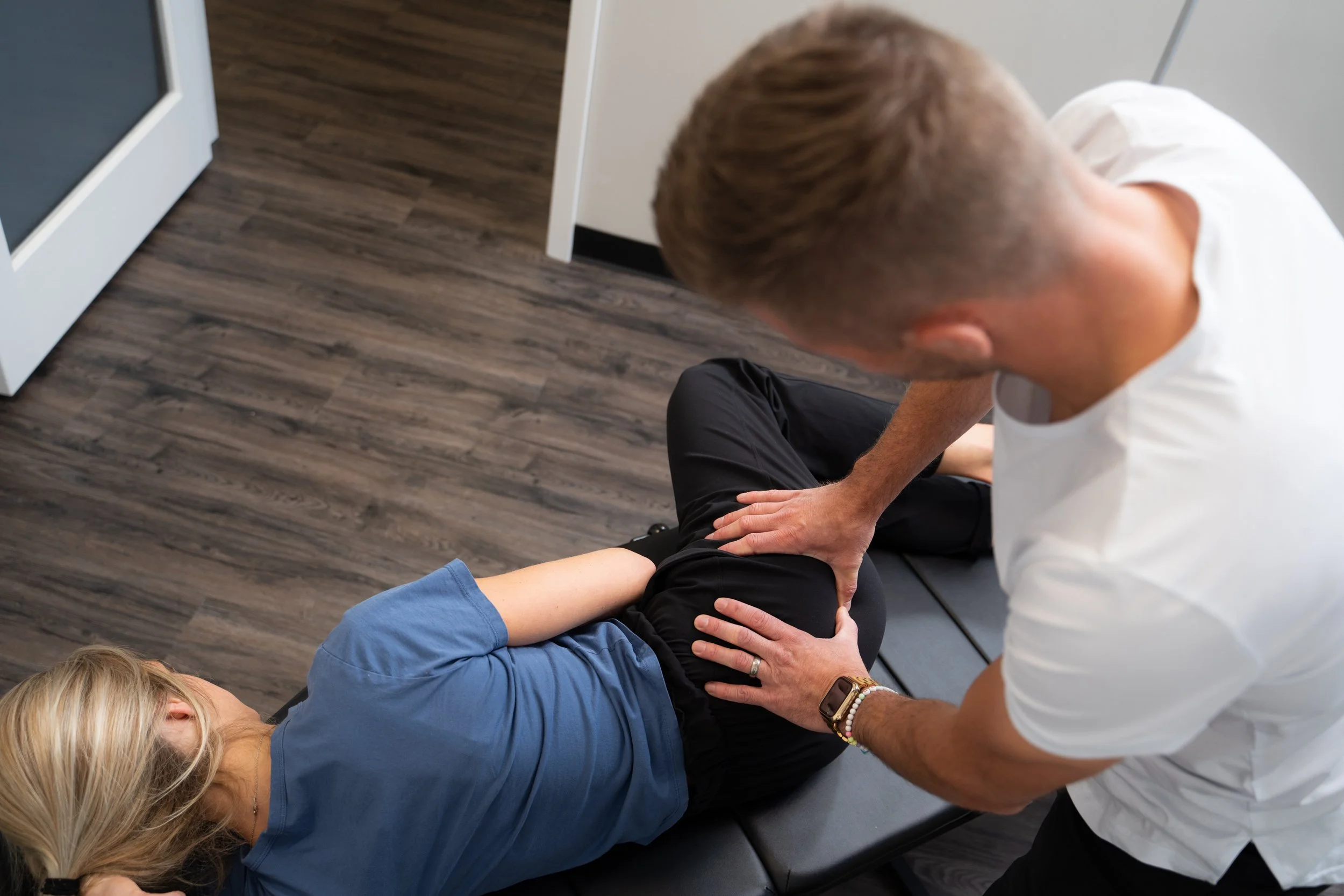
A labral tear is beyond frustrating. Especially when you're active, training hard, or trying to get back to the sport you love.
At Minnesota Movement, we work with athletes and active adults dealing with hip labral tears, shoulder labral tears, and the pain, weakness, stiffness, and movement limitations that can come along with them.
Our approach goes beyond simply treating the painful area. We look at why the joint is struggling in the first place, then build a treatment and rehabilitation plan around your symptoms, goals, sport, training demands, and movement.
Whether you're a golfer in Lake Minnetonka, a hockey player, CrossFit athlete, runner, overhead athlete, or simply someone who wants to move without constantly thinking about your hip or shoulder, our goal is the same:
Reduce pain. Restore movement. Build capacity. Get you back to doing what you love.
What Is a Labral Tear?
The labrum is a ring of tough cartilage that helps deepen and stabilize certain joints.
The hip and shoulder are both ball-and-socket joints, but their labrums serve slightly different purposes.
Hip Labral Tear
The hip labrum surrounds the socket of the hip joint and helps provide stability while contributing to the joint's ability to move smoothly.
A hip labral tear can occur from an acute injury, repetitive loading, or changes in the structure and mechanics of the hip over time.
Hip labral tears are commonly seen in athletes involved in activities requiring:
Running
Cutting and changing direction
Squatting
Jumping
Hockey
Soccer
Golf
Dance
Martial arts
Weightlifting
Repetitive hip flexion and rotation
Importantly, a labral tear seen on an MRI doesn't automatically mean the tear is the source of your pain. Some people have labral changes on imaging without significant symptoms.
That's why we care about the entire person—not just the MRI report.
Shoulder Labral Tear
The shoulder labrum helps deepen the relatively shallow shoulder socket and contributes to shoulder stability.
Shoulder labral injuries can occur after a traumatic event, such as a fall or dislocation, or from repetitive overhead activity.
They are commonly seen in:
Baseball and softball players
Volleyball players
Swimmers
Tennis players
CrossFit athletes
Weightlifters
Climbers
Gymnasts
Throwing athletes
Different types of shoulder labral injuries exist, including SLAP tears and Bankart-type injuries, and symptoms can vary significantly depending on the location and severity of the injury.

Common Symptoms of a Hip Labral Tear
Hip labral tears don't feel exactly the same for everyone.
Common symptoms may include:
Deep pain in the front of the hip or groin
Hip pain with prolonged sitting
Pain with squatting or lunging
Pain getting in or out of a car
Pain with running or cutting
Clicking, catching, or popping in the hip
Hip stiffness or reduced range of motion
Pain with hip rotation
Feeling like the hip is "stuck"
Pain during certain sexual positions
Decreased athletic performance
Difficulty sleeping comfortably
A feeling of instability or weakness
Sometimes the pain is less about one specific movement and more about a gradual decline in what your hip can tolerate.
Common Symptoms of a Shoulder Labral Tear
Shoulder labral injuries can produce a variety of symptoms depending on the type and location of the tear.
Common symptoms include:
Deep shoulder pain
Pain with overhead activity
Pain with throwing
Pain when reaching behind you
Clicking, catching, or popping
A feeling of instability or looseness
Shoulder weakness
Reduced range of motion
Pain when lifting weights
Pain when sleeping on the affected side
Decreased throwing or pressing performance
A feeling that the shoulder may "slip" or give way
For athletes, the first sign isn't always pain.
Sometimes it's simply:
"My shoulder doesn't feel right anymore."
You may notice a loss of velocity, strength, range of motion, confidence, or tolerance before you develop significant pain.
What Causes Hip & Shoulder Labral Tears?
There isn't always one single cause.
Acute Injuries
A labral tear can occur after a significant injury such as:
A fall
Collision
Dislocation
Sudden twisting injury
Forceful shoulder movement
Traumatic hip rotation
Repetitive Stress
Repeatedly loading a joint through the same positions can also contribute to labral pathology.
This can be particularly relevant for athletes who repeatedly perform:
Overhead movements
Throwing
Deep squats
Hip rotation
Cutting
Jumping
High-volume training
Joint Structure & Mechanics
Sometimes the way your joints are shaped or move can influence how much stress is placed on certain tissues.
For example, hip conditions such as femoroacetabular impingement (FAI) can be associated with labral pathology.
But this is where things get important:
The goal isn't necessarily to "fix" the anatomy.
The goal is to understand how your individual body moves and determine what you can change to improve symptoms, strength, mobility, and tolerance to activity.
How Long Does It Take to Recover From a Labral Tear?
There isn't a universal recovery timeline.
Recovery depends on factors including:
Location and severity of the tear
How the injury occurred
Whether the joint is stable
Current pain levels
Strength and mobility deficits
How long you've had symptoms
Training demands
Previous injuries
Your ability to consistently follow a rehabilitation plan
Some people notice meaningful changes within a few weeks of modifying their training and beginning targeted rehabilitation.
Others require several months of progressive strengthening and load management.
For athletes, returning to sport shouldn't simply mean "it doesn't hurt anymore."
We want to know that the joint can tolerate the demands you're going to put on it.
That means progressively rebuilding:
Mobility → Strength → Control → Capacity → Sport
Do You Need Surgery for a Labral Tear?
Not necessarily.
Some people with labral tears do well with conservative treatment, while others ultimately benefit from orthopedic evaluation and surgical intervention.
We may recommend additional medical evaluation or imaging when symptoms suggest that conservative care isn't appropriate or isn't producing the expected progress.
Red flags that warrant prompt medical evaluation can include:
Significant traumatic injury
Recurrent dislocation or instability
Inability to bear weight after an injury
Significant weakness
Progressive neurological symptoms
Severe or worsening pain
Mechanical locking
Symptoms that aren't improving despite appropriate rehabilitation
Our job isn't to keep you in the clinic forever.
If another provider or a different level of care makes more sense, we'll tell you.
How We Evaluate a Hip or Shoulder Labral Tear
At Minnesota Movement, we don't simply look at where it hurts.
We look at how you move.
Your evaluation may include:
Detailed history of the injury
Joint range-of-motion testing
Strength testing
Functional movement assessment
Sport-specific movement testing
Hip or shoulder stability assessment
Assessment of neighboring joints
Evaluation of movement compensations
Neurological screening when appropriate
Review of previous imaging or medical records
For an athlete, this may also mean looking at what happens when you actually perform the movements that matter to you.
Because your hip doesn't exist in isolation.
And neither does your shoulder.
Your foot, ankle, knee, pelvis, spine, rib cage, shoulder blade, and other surrounding structures can all influence how a joint moves and loads.
If we're not assessing, we're guessing.
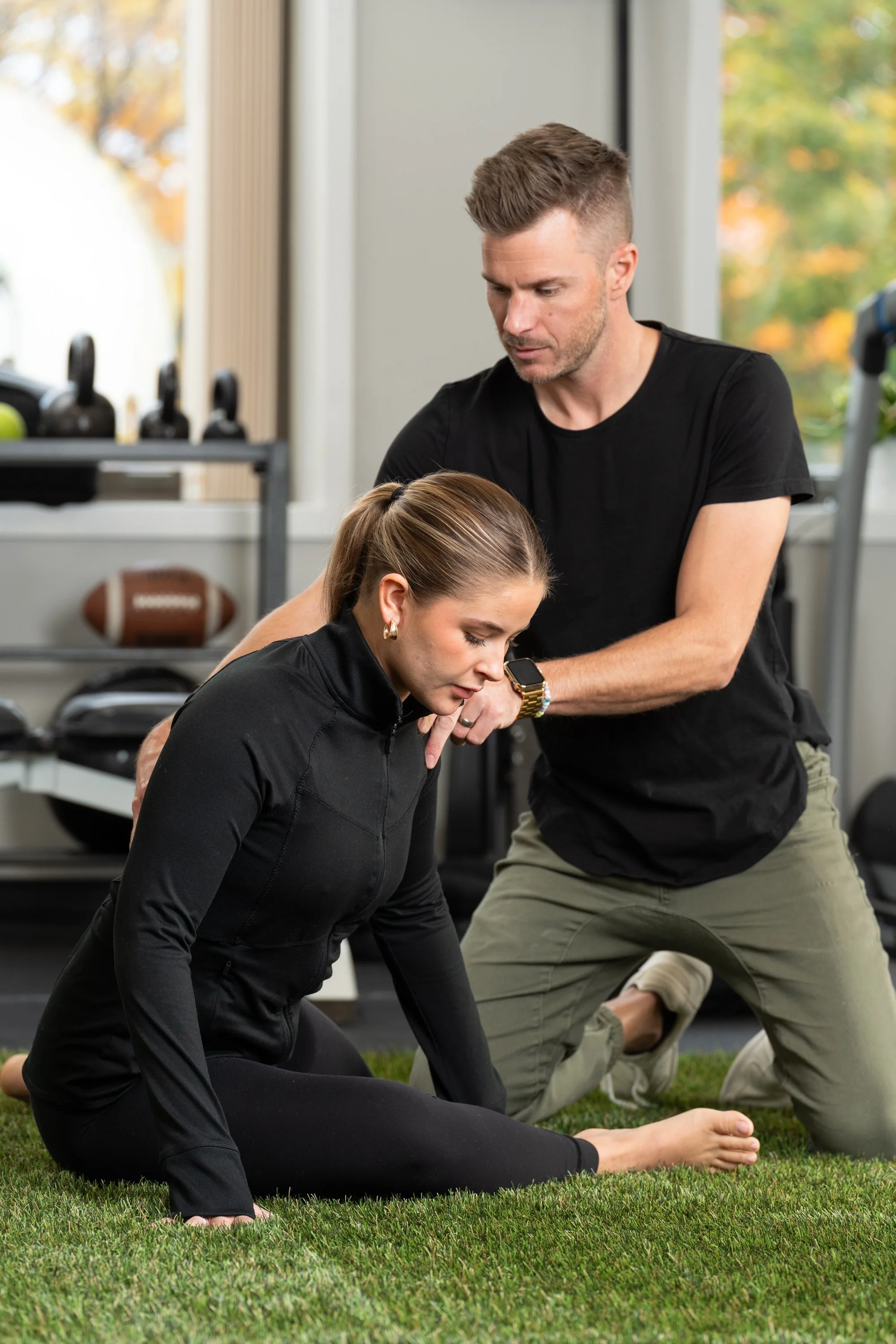
Can a Labral Tear Heal Without Surgery?
This is one of the most common questions we hear.
The answer isn't as simple as yes or no.
Some labral tears can be successfully managed with conservative care, while others may require additional medical evaluation or surgery—particularly when there is significant instability, persistent mechanical symptoms, or a traumatic injury that has substantially damaged the joint.
Also, the goal of conservative care isn't always to make the labrum look normal on an MRI.
Instead, we're often trying to improve the things you can change:
Pain
Strength
Mobility
Joint control
Movement quality
Training tolerance
Confidence
Overall capacity
In other words:
We care about how your hip or shoulder functions—not just what a scan says.
How We Treat Hip & Shoulder Labral Tears
Treatment is individualized because no two labral injuries behave exactly the same.
Depending on your evaluation, treatment may include a combination of:
Sports Chiropractic
Joint manipulation and mobilization can sometimes help improve joint motion and reduce the stiffness or movement restrictions surrounding the affected area.
The goal isn't to "put the labrum back in place."
Instead, we're looking at how the surrounding joints and tissues are moving and whether improving mobility can make movement more comfortable.
Corrective Exercise & Rehabilitation
This is a major component of our approach.
Rather than relying exclusively on passive treatment, we want to help your body build the strength and control necessary to tolerate the activities you actually care about.
Exercises may focus on:
Joint stability
Strength
Motor control
Range of motion
Single-leg stability
Core control
Scapular control
Rotator cuff strength
Glute strength
Hip control
Sport-specific capacity
Functional Dry Needling
When appropriate, Functional Dry Needling can be used to address muscular tension, sensitivity, and movement restrictions surrounding the hip or shoulder.
It can be particularly useful when muscles are guarding or when excessive tone is limiting your ability to move comfortably.
Soft-Tissue Techniques
Depending on what we find, treatment may include:
Manual muscle therapy
ART
Instrument-assisted soft tissue work
RockBlades
Myofascial techniques
Cupping
Flossing techniques
These aren't used simply because "that's what we do."
They're tools.
We use the tool that makes sense for you and the problem we're trying to solve.
Activity Modification
Sometimes the answer isn't "stop exercising."
Sometimes it's:
Change how you're loading the joint while we build your capacity back up.
That may mean temporarily modifying:
Training volume
Exercise selection
Range of motion
Intensity
Frequency
Throwing volume
Running volume
Squatting depth
Overhead activity
The goal is to keep you moving whenever possible while giving the irritated joint an opportunity to calm down.
Common Corrective Exercises for Hip Labral Tears
Your exact exercise program should be based on your symptoms and evaluation, but common exercises may include:
Glute Bridges
Helps build hip extension strength while allowing relatively controlled hip movement.
Photo suggestion: Use an original Minnesota Movement photo showing a patient performing a bridge correctly.
Side-Lying Hip Abduction
Targets the lateral hip musculature and can help build strength and control around the pelvis.
Split Squats
A great progression for developing single-leg strength and hip control.
Hip Airplanes
Useful for developing single-leg balance, hip control, and rotational control when appropriately progressed.
Controlled Hip Rotation
Specific internal and external rotation exercises can help improve strength and control through the available range of motion.
Important: More range isn't always better. The goal is appropriate, controlled range that your hip can tolerate.
Common Corrective Exercises for Shoulder Labral Tears
Depending on the type of injury and your symptoms, rehabilitation may include:
Scapular Wall Slides
Helps develop controlled upward rotation and overhead movement.
Serratus Wall Slides
Useful for developing scapular control and shoulder blade strength.
Band External Rotation
Targets the rotator cuff and helps build shoulder stability.
Rows
Build strength through the upper back and help develop scapular control.
Bottom-Up Kettlebell Carries
A more advanced exercise that challenges grip, rotator cuff activation, and shoulder stability.
Landmine Press
Can provide a useful progression toward pressing when traditional overhead pressing isn't yet well tolerated.
Why Minnesota Movement for Labral Tear Rehabilitation?
At Minnesota Movement, we don't treat an MRI.
We treat people.
Two people can have nearly identical labral findings on an MRI and completely different symptoms, movement patterns, training histories, and goals.
That's why our approach combines:
Sports Chiropractic + Rehabilitation + Corrective Exercise + Movement Assessment
Instead of handing you a generic list of exercises and sending you on your way, we want to understand what your body is doing, what you're asking it to do, and what needs to change to get you where you want to go.
Our clinic in Excelsior, Minnesota, serves athletes and active adults throughout the Lake Minnetonka area, including Minnetonka, Wayzata, Chanhassen, Deephaven, and surrounding communities.
Whether your goal is to return to competitive sports, get back to lifting, play golf without pain, or simply stop thinking about your hip or shoulder every time you move, we're here to help you build a plan.
Ready to Get Your Hip or Shoulder Moving Better?
If you've been told you have a labral tear—or you've been dealing with persistent hip or shoulder pain that is limiting your training—let's figure out what's actually going on.
Don't just treat the tear. Treat the person attached to it.
Located in Excelsior, Minnesota, Minnesota Movement works with athletes and active adults throughout the Lake Minnetonka area and beyond.
Hip & Shoulder Labral Tear FAQs
Can a chiropractor treat a hip labral tear?
A chiropractor cannot manually "repair" a torn labrum. However, sports chiropractic care and rehabilitation may help improve joint mobility, strength, movement mechanics, and tolerance to activity while reducing symptoms.
Can a chiropractor treat a shoulder labral tear?
Yes, conservative sports chiropractic care may be appropriate for some people with shoulder labral injuries. Treatment typically focuses on improving surrounding joint mobility, shoulder blade control, rotator cuff strength, and overall shoulder stability rather than trying to physically repair the labrum.
Can you exercise with a labral tear?
Often, yes—but the right type and amount of exercise matters. Completely stopping activity isn't always necessary. We can help modify your training while progressively rebuilding your ability to tolerate the movements you need for your sport or lifestyle.
Does a labral tear always cause pain?
No. Labral changes can sometimes appear on imaging in people who have little or no pain. That's one reason we don't base treatment decisions on an MRI alone.
Do I need an MRI for a labral tear?
Not necessarily. The need for imaging depends on your history, symptoms, examination findings, and how you're responding to care. When imaging would meaningfully change your treatment plan, we can help determine when referral is appropriate.
What is the difference between a hip labral tear and hip impingement?
They are different conditions, although they can occur together. Femoroacetabular impingement (FAI) describes a structural shape or motion-related issue involving the hip joint, while a labral tear describes an injury or change to the cartilage around the hip socket.
How long does a labral tear take to heal?
Recovery varies considerably. Some people improve within several weeks with appropriate load management and rehabilitation, while others require several months. Your timeline depends on the severity of the injury, your symptoms, your goals, and how well you tolerate progressive loading.
Should I stop playing sports if I have a labral tear?
Not automatically. Depending on your symptoms and the type of sport, you may be able to continue modified training while working through rehabilitation. The goal is to find the appropriate level of loading—not necessarily complete rest.