Chiropractic Care for TOS - Thoracic Outlet Syndrome
Sports-Focused Evaluation & Treatment in the Excelsior Lake Minnetonka Area
Thoracic Outlet Syndrome (TOS) is one of the most commonly misdiagnosed conditions we see in active adults and athletes. Also known as Brachial Plexus Disorder, it’s often brushed off as a “pinched nerve,” carpal tunnel syndrome, median nerve entrapment, or even general shoulder tightness — yet the root cause lives higher up the chain.
At Minnesota Movement Sports Chiropractic, our goal isn’t to guess. It’s to identify exactly where and why the nerve or blood vessel(s) are being compromised, then restore proper movement, posture, and tissue balance so symptoms don’t keep coming back.

What Is Thoracic Outlet Syndrome?
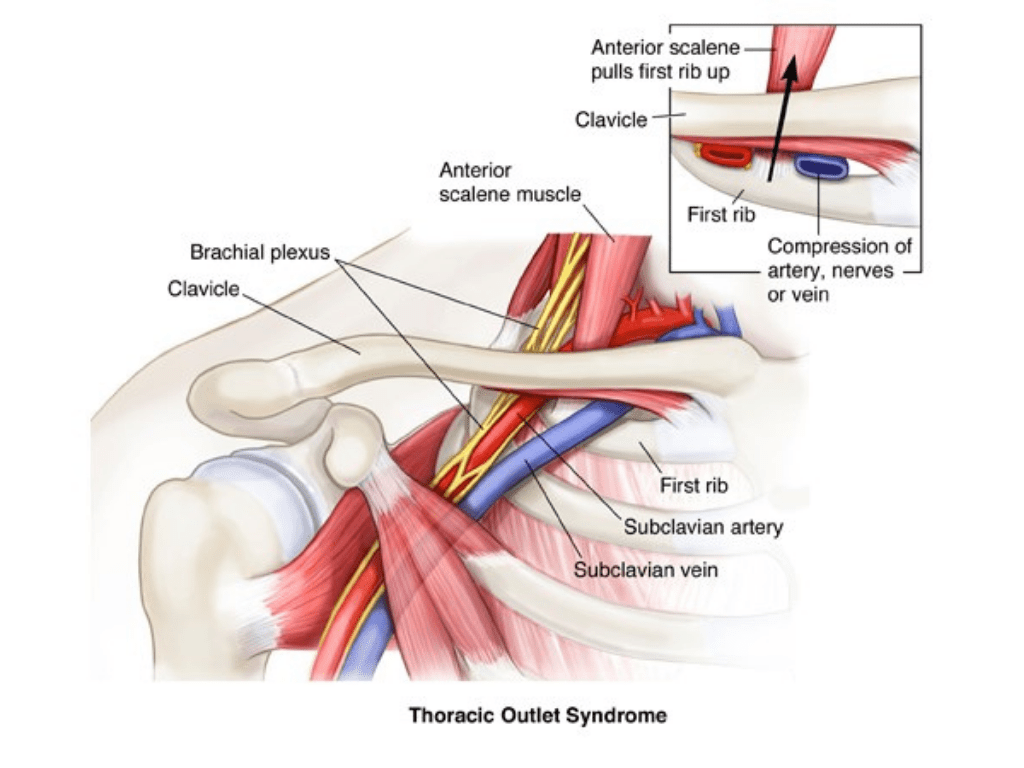
The thoracic outlet is a narrow passageway where a bundle of nerves, veins, and arteries travels from your spine/neck, under your collarbone, and down into your arm and hand. When this space becomes crowded or restricted, symptoms show up downstream into the forearm, wrist, or hand — far from the actual source.
This is why TOS can feel confusing, inconsistent, or hard to pin down. It’s a classic case of victim vs. culprit. Which is why chasing the location symptoms is going to lead to ineffective long-term results.
Key difference from Thoracic Outlet Syndrome vs. Carpal Tunnel or a Cervical Pinched Nerve:
TOS symptoms like numbness, weakness, or tingling are often position-dependent, posture-driven, and worsened with overhead activity or prolonged sitting.
Common Causes & Mechanisms of TOS
TOS is rarely a single-event injury. It’s usually a slow build-up of structural and postural stress.
Common contributors include:
Forward head posture and rounded shoulders
Overactive or tight scalene muscles
Elevated or restricted first rib
Pectoralis minor tightness or overuse
Repetitive overhead activity (swimming, volleyball, CrossFit, tennis)
Prolonged desk work without movement variability
FAQ – Thoracic Outlet Syndrome
Is TOS the same as a pinched nerve?
No. TOS involves compression outside the spine, often posture-related.
Do I need imaging?
Not always. A thorough clinical exam usually tells us what we need.
Can I keep training?
Often yes — with modifications.
Does this require surgery?
Rarely. Most cases respond well to conservative care when done correctly.
Common Symptoms of Thoracic Outlet Syndrome
Symptoms vary depending on what structure is compressed — nerves, veins, or arteries.
Neurogenic TOS (most common)
Numbness or tingling into the arm or fingers
Weakness or heaviness in the arm
Burning or aching pain in the neck, shoulder, or arm
Symptoms worsen with overhead activity or prolonged desk work
Vascular TOS
Coldness or discoloration of the hand
Swelling or fullness in the arm
Fatigue with activity
Changes in pulse position
Nonspecific / Chronic TOS
Diffuse arm pain without clear imaging findings
Postural fatigue
Symptoms that fluctuate day-to-day
Often seen in desk workers, endurance athletes, and overhead sport athletes

How We Treat Thoracic Outlet Syndrome at Minnesota Movement
There is no one-size-fits-all treatment for TOS. If someone only adjusts your neck or tells you to “stretch more,” they’re missing a crucial component.
Our approach focuses on decompressing the outlet, restoring breathing mechanics, and rebalancing the entire upper quarter.
Non-Surgical Chiropractic Treatment May Include:
Breathing retraining to reduce scalene tone
Postural correction exercises (neck, thoracic spine, scapula)
Chiropractic adjustments to the lower cervical and upper thoracic spine
First rib mobilization/manipulation
Manual muscle therapy & Active Release Technique
RockTape for postural and proprioceptive feedback
Self myofascial release strategies for home care

What Recovery Looks Like:
Mild / early cases: 4–6 weeks
Moderate cases: 6–10 weeks
Chronic / long-standing cases: 10–16+ weeks depending on postural habits and consistency
Prognosis is very good when posture, breathing, and tissue load are addressed together — not in isolation.
Why Patients Choose Minnesota Movement
We don’t chase symptoms down the arm.
We fix why the outlet is compressed in the first place.
Ready to find results - not just relief? Book your Complimentary Consultation to learn more!