
Frozen Shoulder: Why Your Shoulder Won’t Move (And What You Can Actually Do About It)
If you’ve ever tried to reach behind your back to put on a jacket, grab your wallet, or fasten a bra and felt like your shoulder was staging a full-blown protest.. then welcome to the wonderfully frustrating world of frozen shoulder.
Maybe it started as a little ache. Then sleeping on that side became uncomfortable. Reaching overhead got harder. Before long, putting on a shirt, washing your hair, or reaching for something in the back seat of your car became a daily reminder that something wasn’t right.
And the most frustrating part? You might not even remember doing anything to cause it.
Frozen shoulder, also known as adhesive capsulitis, can be a stubborn condition. But here's the good news: losing shoulder mobility doesn't automatically mean your shoulder is permanently damaged, and you don't have to spend the next several months aggressively stretching it and hoping for the best.
At Minnesota Movement Sports Chiropractic & Rehab in Excelsior, Minnesota, our approach is to figure out what's happening, understand what your shoulder can currently tolerate, and develop a plan to progressively restore movement, strength, and confidence.
Because our goal isn't just to get your shoulder feeling better today. It's to help you get back to doing the things you enjoy without constantly worrying about what your shoulder might do next.
Let's get into it.

What Is Frozen Shoulder (Adhesive Capsulitis)?
Frozen shoulder is a condition involving the joint capsule surrounding your shoulder joint. This capsule helps hold the joint together while allowing the impressive range of motion your shoulder needs to function.
With frozen shoulder, the capsule becomes irritated, thickened, and increasingly stiff. The result is pain and a progressive loss of shoulder movement.
Unlike some other shoulder conditions, frozen shoulder typically restricts both active and passive range of motion. In other words, it hurts or feels restricted when you move your arm yourself, but it also remains restricted when someone else attempts to move your arm for you.
That's an important distinction.
For example, if your shoulder hurts when you lift your arm overhead, the problem could involve your rotator cuff, biceps tendon, shoulder joint, or another structure. If your shoulder is progressively losing movement in multiple directions — particularly when someone else tries to move it — frozen shoulder becomes a more important consideration.
A proper assessment helps distinguish frozen shoulder from other causes of shoulder pain and stiffness.
And no, not every stiff shoulder is a frozen shoulder. That's why we assess the person, not just the symptom.
What Causes Frozen Shoulder?
Here's where things get interesting.
Frozen shoulder can develop without a clear injury or identifiable event. You might not have fallen, lifted something heavy, or done anything particularly exciting. Your shoulder simply starts hurting, and its mobility gradually declines.
There isn't always one obvious culprit.
Frozen shoulder is generally classified into two categories:
Primary frozen shoulder: Develops without an obvious underlying cause.
Secondary frozen shoulder: Develops in association with another event or condition, such as a shoulder injury, surgery, or a period of significantly reduced shoulder movement.
Certain factors are associated with a greater likelihood of developing frozen shoulder, including diabetes and thyroid disorders. It is also more common in adults between approximately 40 and 65 years old.
Other shoulder problems can lead people to limit movement because of pain, which may contribute to stiffness and make the overall picture more complicated.
But here's an important distinction: we shouldn't assume that every tight muscle, limited movement, or painful shoulder is the root cause of your problem.
Sometimes the restriction is coming from the joint capsule itself. Sometimes another shoulder condition is creating the pain and guarding. Sometimes multiple factors are contributing.
The job is to figure out which situation we're dealing with before deciding what to do about it.

What Are the Common Symptoms of Frozen Shoulder?
Frozen shoulder often develops gradually, with symptoms becoming more noticeable over time.
Common signs and symptoms include:
Progressive shoulder stiffness: Your shoulder becomes increasingly difficult to move in multiple directions.
Pain when reaching overhead: Lifting your arm to grab something from a shelf becomes uncomfortable or impossible.
Difficulty reaching behind your back: Getting dressed, fastening clothing, or reaching into a back pocket becomes frustrating.
Night pain: Sleeping on the affected side becomes uncomfortable, and shoulder pain may disrupt your sleep.
Difficulty with everyday activities: Washing your hair, putting on a coat, reaching for a seat belt, or carrying out normal household tasks becomes harder.
Loss of external rotation: Rotating your arm outward, such as when positioning your hand away from your body, often becomes particularly restricted.
One of the biggest clues is that the problem isn't simply pain during one particular movement. It's a progressive loss of your shoulder's overall ability to move.
If you're experiencing these symptoms, getting an appropriate assessment can help determine whether frozen shoulder is actually the issue or whether another condition is responsible.
The Three Stages of Frozen Shoulder
Frozen shoulder is commonly described as having three overlapping stages. The timeline varies considerably between individuals, so these aren't rigid deadlines your shoulder has to follow.
1. The Freezing Stage: Pain Is Taking Center Stage
During this stage, shoulder pain gradually increases, and your range of motion begins to decline.
You might notice that certain movements are becoming uncomfortable, but you can still get through most daily activities with a little creativity and a few questionable compensations.
Night pain can be particularly frustrating during this phase.
This is often when people start stretching more aggressively, trying to force their shoulder back into its normal range of motion.
Understandable? Absolutely.
Always helpful? Not necessarily.
When the shoulder is highly irritable, repeatedly forcing it into painful positions can aggravate symptoms. The goal isn't to avoid all movement, but to find movements and activities your shoulder can tolerate while addressing the problem appropriately.
2. The Frozen Stage: Stiffness Becomes the Main Problem
During this stage, pain may become less intense at rest, but significant stiffness remains.
Your shoulder might feel like it's hitting a brick wall when you attempt to reach overhead or rotate your arm outward.
You may begin relying on your elbow, shoulder blade, or entire torso to compensate for the movement your shoulder joint can no longer provide.
This is where simply chasing pain relief may not be enough.
We need to understand how much movement is available, what limits that movement, and how to begin restoring function without repeatedly provoking unnecessary irritation.
3. The Thawing Stage: Movement Starts Returning
Eventually, many people begin to regain shoulder mobility, and everyday activities become easier.
The frustrating part? This process can take months, and sometimes considerably longer.
Frozen shoulder often improves over time, but recovery isn't always quick or complete without appropriate management. Some people experience persistent limitations.
This is why having a plan matters.
You don't need to panic if your shoulder isn't improving overnight. But you also don't need to sit around waiting indefinitely without understanding what's happening or what options may help.
What Does Pain Actually Mean? (And Why It Matters With Frozen Shoulder)
Let's talk about something we spend a lot of time discussing with patients at Minnesota Movement: what pain means.
Pain is your body's way of communicating that something may need attention. It's a protective experience influenced by multiple factors, including tissue irritation, the nervous system, your recent activity, and how sensitive the affected area has become.
But pain isn't a perfect measurement of tissue damage.
More pain doesn't automatically mean you've caused more damage. And less pain doesn't necessarily mean every underlying issue has resolved.
With frozen shoulder, the joint capsule itself can become irritated and restricted. Your nervous system can also become more sensitive to movements that were previously routine.
The result? Movements that once felt completely normal can suddenly feel threatening, uncomfortable, or impossible.
Your shoulder isn't necessarily being dramatic. It's responding to a combination of physical changes and protective processes.
The goal isn't to ignore pain, fear every sensation, or push through everything. It's to understand what your symptoms are telling us and respond appropriately.
For example, some mild discomfort during an appropriately selected movement may be acceptable. Sharp, escalating pain or a prolonged flare-up after stretching may be a sign that the intensity needs to change.
The right response depends on your presentation, the stage of the condition, and how your shoulder responds during and after activity.
This is one reason a cookie-cutter exercise program can fall short. Two people with frozen shoulder may have very different levels of pain, mobility, and tolerance for movement.
Their treatment shouldn't automatically look identical.
Why Aggressively Stretching a Frozen Shoulder Can Backfire
If your shoulder is stiff, stretching seems like the obvious solution.
Less movement must mean you need more stretching, right?
Not always.
When a joint capsule is irritated and highly sensitive, repeatedly forcing the shoulder into painful end ranges may increase symptoms without meaningfully improving your function.
Think of it this way: if your shoulder is already struggling to tolerate a particular movement, adding more force isn't necessarily going to convince it to cooperate.
Sometimes it simply gives you a more irritated shoulder.
That doesn't mean stretching is bad. Appropriate mobility work can be an important part of frozen shoulder rehabilitation.
The key is matching the intensity, direction, and duration of the movement to what your shoulder can currently tolerate.
During a more painful phase, treatment may emphasize comfortable movement, symptom management, and maintaining the mobility you can access without excessive irritation.
As symptoms settle and movement improves, the plan can progress toward more targeted mobility work and eventually greater strength and functional capacity.
We aren't interested in winning a wrestling match with your shoulder. We're interested in getting it moving again.
And sometimes that means doing less initially so you can accomplish more over the long term.
How We Approach Frozen Shoulder at Minnesota Movement
At Minnesota Movement Sports Chiropractic & Rehab in Excelsior, MN, our approach is straightforward: identify what's contributing to your symptoms, address what we can, and progressively rebuild your ability to move and function.
We don't believe every shoulder needs the same treatment, and we don't believe getting you temporarily feeling better is the only measure of success.
Our goal is to help you understand your condition, give you tools to manage it, and get you back to the activities that matter to you.
Here's what that can look like.
1. A Thorough Assessment: Figure Out What's Actually Happening
Before we start stretching, adjusting, needling, or prescribing exercises, we need to understand what we're dealing with.
Your assessment may include:
Reviewing how your symptoms started and how they've changed over time.
Assessing active and passive shoulder range of motion.
Comparing movement in different directions, particularly external rotation.
Evaluating shoulder strength and function where appropriate.
Assessing the shoulder blade, upper back, and surrounding regions.
Screening for other potential causes of pain or stiffness.
Determining whether additional medical evaluation, imaging, or referral is appropriate.
This helps us establish a baseline and develop a treatment plan that makes sense for your presentation.
If the findings suggest something other than frozen shoulder — or a condition that needs additional medical attention — we want to identify that rather than blindly continuing with the wrong plan.
2. Hands-On Treatment: An Option, Not the Entire Plan
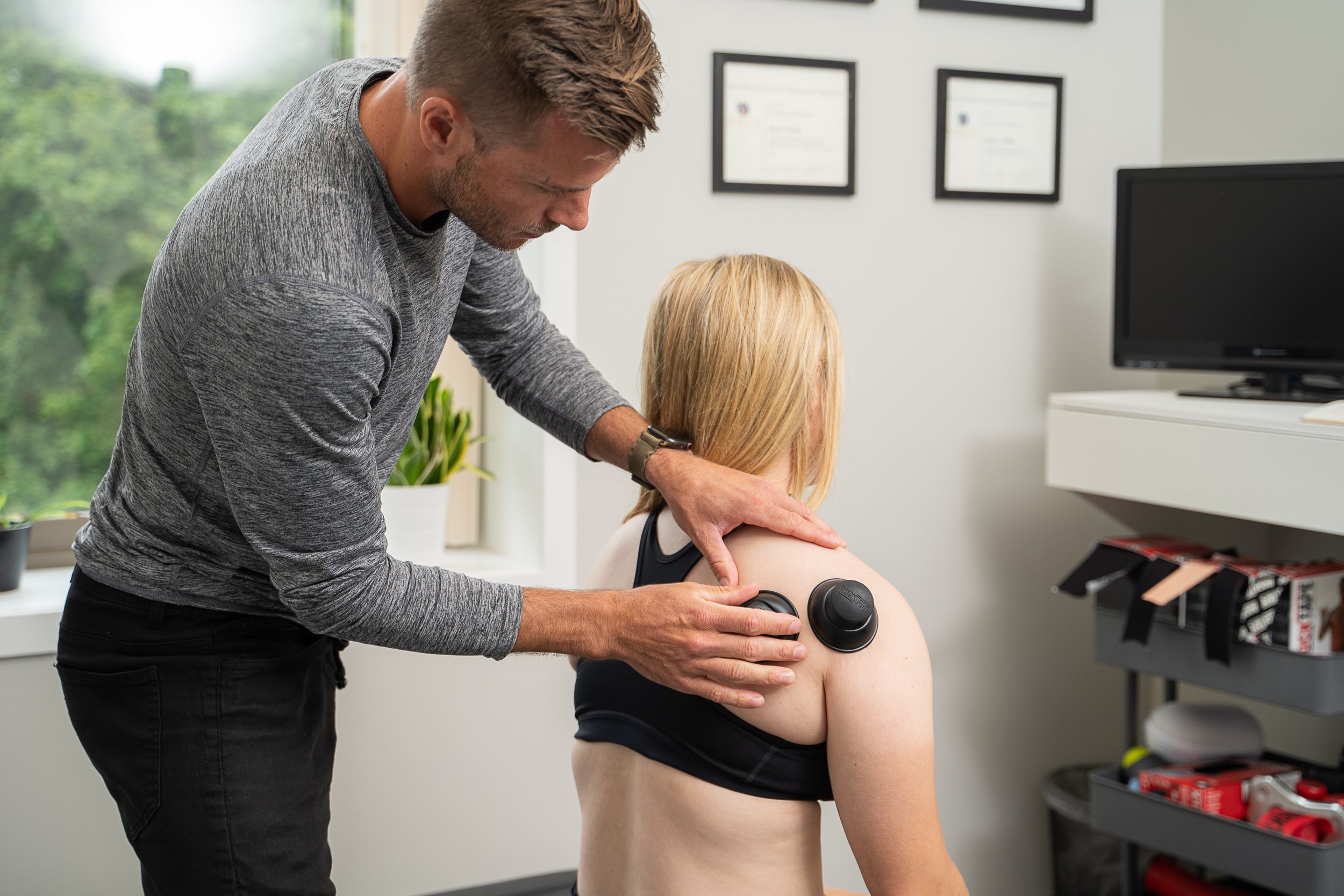
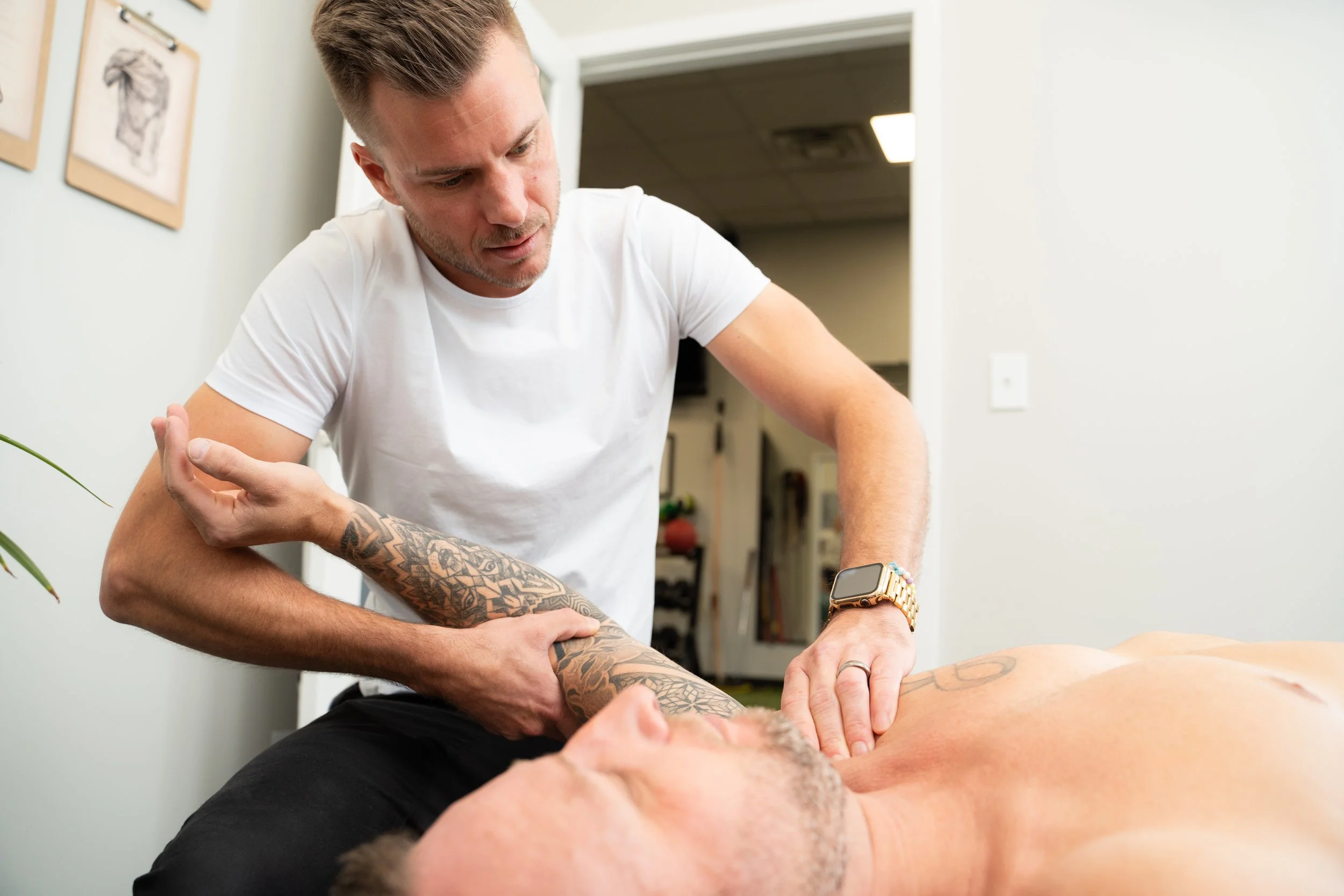
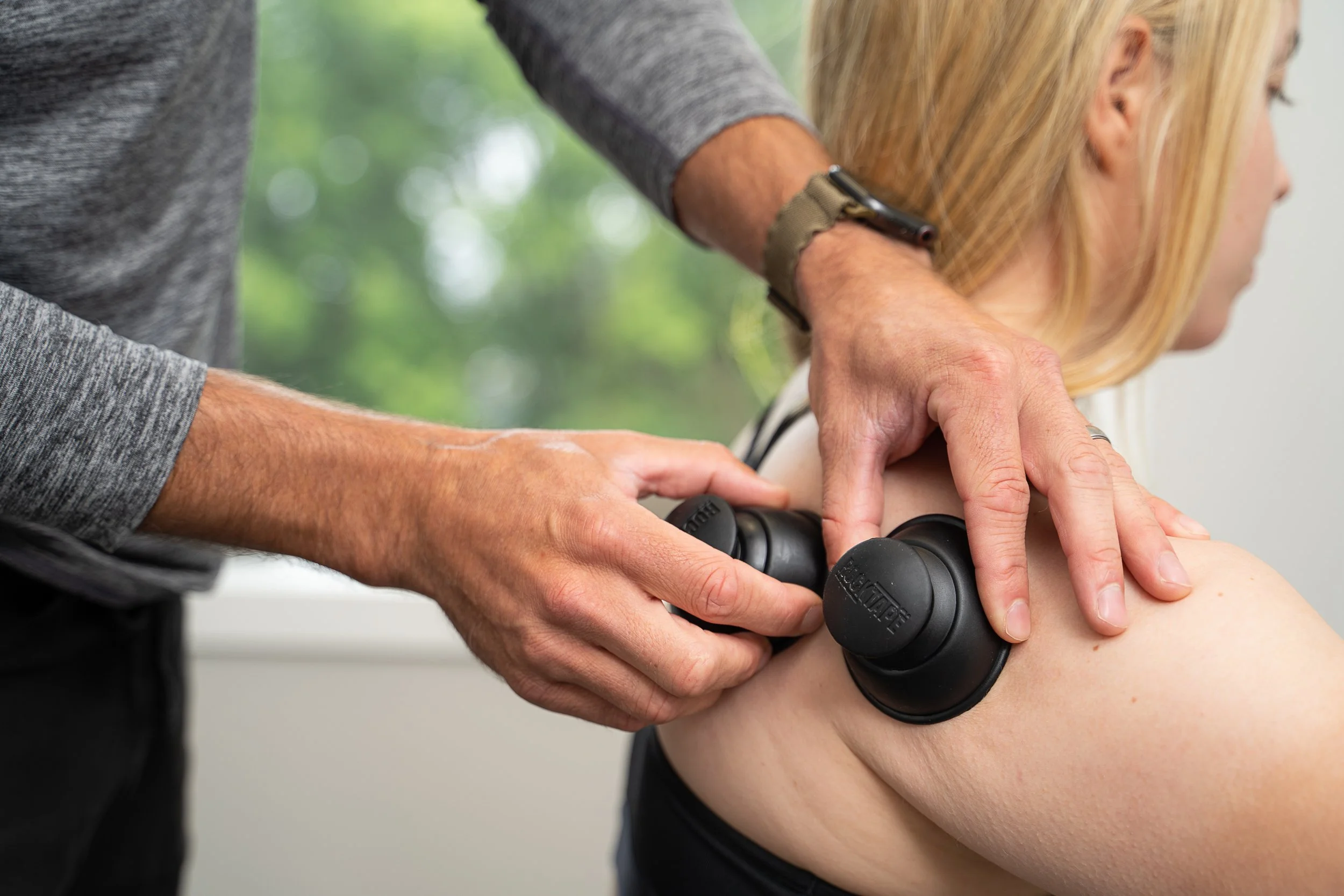
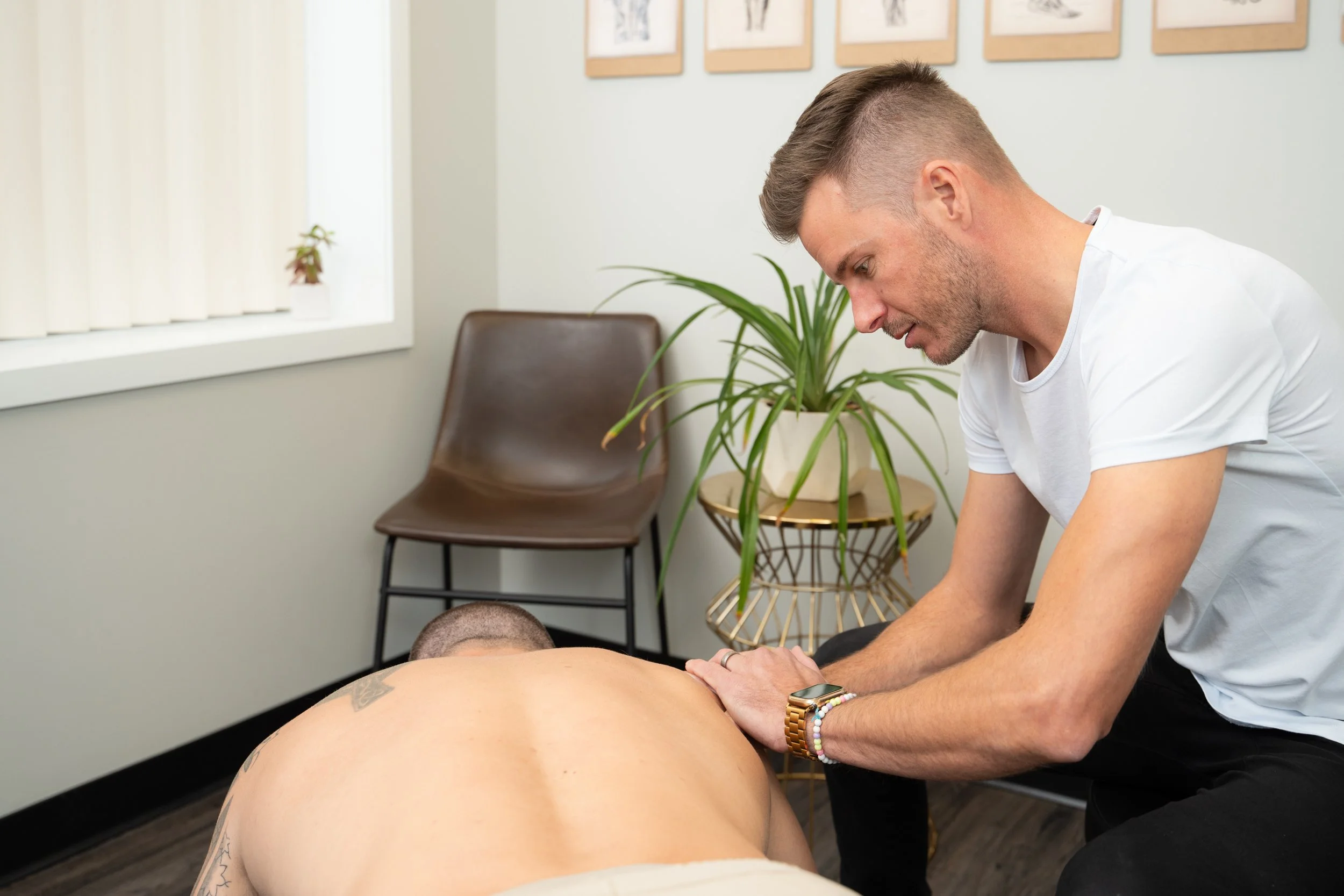
Depending on your symptoms and examination findings, treatment may include hands-on techniques intended to improve comfort and support movement.
These may include:
Shoulder joint mobilization: Appropriately selected techniques to address mobility limitations and help improve function.
Soft-tissue treatment: Techniques such as Active Release Technique (ART) or manual muscle therapy when surrounding muscle tension or tenderness is contributing to symptoms.
Chiropractic adjustments: When clinically appropriate, treatment of the shoulder girdle or adjacent regions may be incorporated into your plan.
Here's the important part: these techniques aren't interchangeable magic tricks, and none is guaranteed to resolve a frozen shoulder on its own.
If the primary limitation involves the joint capsule, repeatedly treating the surrounding muscles isn't going to magically eliminate that restriction.
Hands-on care can be useful, but it should serve a purpose within a broader rehabilitation plan.
We use it when it makes sense for the individual in front of us.
3. Corrective Exercise: Restore the Movement You Can Control
Movement is medicine — but the right dose matters.
Exercise selection for frozen shoulder depends on how irritable the shoulder is and how much mobility is currently available.
Early on, that may mean gentle, tolerable movements designed to maintain available range of motion and avoid excessive symptom aggravation.
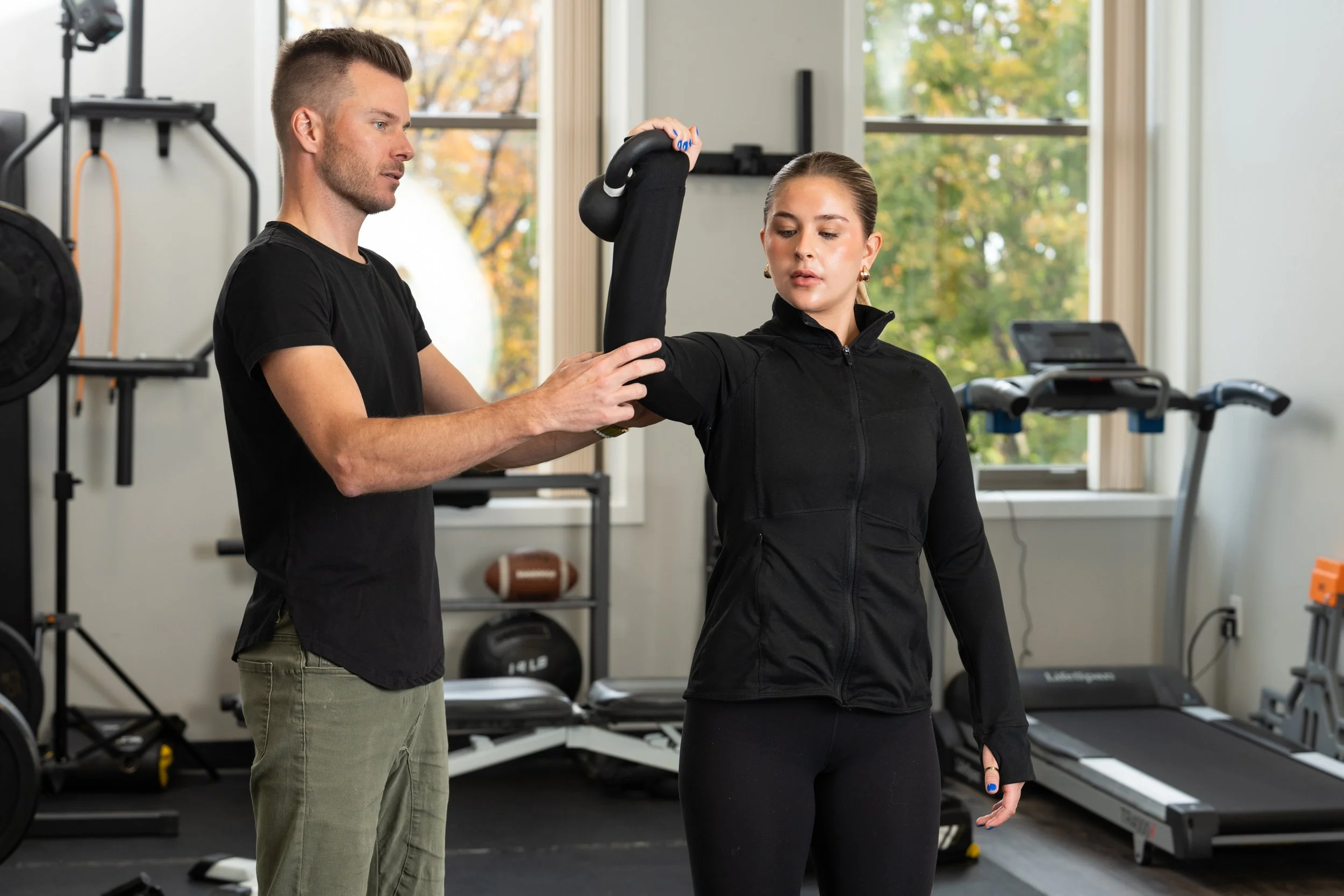
As the shoulder becomes less irritable, rehabilitation may progress toward more targeted mobility exercises, active-assisted movement, and strengthening.
Depending on your presentation, exercises might include:
Pendulum movements: Gentle shoulder movement with the arm relaxed.
Table slides: Using a table to help guide the arm through a comfortable range.
Wall-assisted movements: Gradually exploring overhead motion as tolerated.
Assisted external rotation: Working on a direction of movement that is often restricted in frozen shoulder.
Progressive shoulder strengthening: Rebuilding strength and functional capacity when appropriate.
These are examples, not a universal prescription. The right exercise, range, intensity, and progression depend on your examination findings.
And please don't take the exercise list as permission to aggressively force your arm into every position.
The goal is to challenge the shoulder appropriately, not to irritate it into submission.
4. Education: Understand What's Happening and What to Expect
We believe patient education is one of the most valuable parts of rehabilitation.
When you understand what's happening, you can make better decisions about activity, exercise, recovery, and when to ask for help.
We'll help you understand what your symptoms may indicate, why certain movements are restricted, what treatment is intended to accomplish, and how to modify your activities while your shoulder recovers.
We also want you to know when progress is realistic, when the plan needs adjusting, and when another healthcare provider may be needed.
Our goal isn't to make you dependent on appointments forever.
If we're doing our job well, we're giving you the knowledge and tools to manage your body with greater confidence and independence.
5. A Plan Built Around Your Life
Frozen shoulder doesn't happen in a vacuum.
You still have work to do, kids to chase, groceries to carry, workouts to modify, and possibly a golf game you're desperately trying not to miss.
Your treatment plan needs to account for those realities.
For some people, that means temporarily modifying overhead lifting. For others, it means finding comfortable ways to stay active while shoulder mobility gradually improves.
It may also mean discussing other treatment options with your physician if pain is severe or progress is limited.
Our focus is to help you remain as active as reasonably possible while respecting what your shoulder can tolerate.
Because the objective isn't simply to improve a range-of-motion measurement in the clinic. It's to make your shoulder more useful in real life.
How Long Does Frozen Shoulder Take to Heal?
Here's the answer nobody loves: it depends.
Frozen shoulder often follows a prolonged course, with meaningful recovery taking months and sometimes one to three years.
Some people improve sooner. Others experience persistent pain, stiffness, or functional limitations for much longer than they'd like.
Recovery depends on factors such as symptom severity, the stage of the condition, other health considerations, and how the shoulder responds to treatment.
It's also important to distinguish between reducing pain, improving mobility, and restoring full function. Those things don't always happen at the same pace.
We can't promise that a particular treatment will fix your shoulder in six visits or that a specific exercise will eliminate your symptoms in two weeks.
What we can do is assess your current limitations, establish measurable goals, monitor your progress, and adjust your plan as your shoulder changes.
That means tracking more than whether your shoulder feels a little better after an appointment.
Can you reach higher? Rotate farther? Get dressed more easily? Sleep more comfortably? Return to the gym with fewer limitations?
Those are the kinds of improvements that matter.
When Should You Seek Professional Help for Shoulder Stiffness?
If your shoulder is becoming progressively stiffer, your pain is disrupting sleep, or everyday activities are becoming increasingly difficult, consider getting it assessed rather than assuming it will resolve on its own.
An assessment is particularly valuable when you're unsure whether the problem is frozen shoulder, a rotator cuff injury, another shoulder condition, or something involving the neck.
Seek prompt medical evaluation if shoulder pain follows significant trauma, you have a visible deformity, you cannot move your arm after an injury, or you develop marked swelling, redness, fever, or other concerning symptoms.
Chest discomfort, shortness of breath, sweating, or pain that may indicate a cardiac problem warrants emergency medical attention rather than routine shoulder treatment.
The point isn't to panic about every ache. It's to recognize when the symptoms warrant a closer look.
Frozen Shoulder Treatment in Excelsior, MN
If you're dealing with a stiff, painful shoulder that seems to be getting worse by the week, you don't have to figure everything out yourself.
At Minnesota Movement Sports Chiropractic & Rehab, we work with athletes, active adults, and everyday people dealing with shoulder pain throughout Excelsior, Minnetonka, Wayzata, Chanhassen, Deephaven, and the surrounding Lake Minnetonka communities.
Whether your goal is getting dressed without a struggle, returning to strength training, swimming comfortably, or getting back on the golf course, we'll work to understand what's limiting your shoulder and develop a plan that fits your needs.
We combine individualized assessment, hands-on treatment when appropriate, corrective exercise, and patient education to help you move from pain toward performance.
No cookie-cutter protocols. No treating every stiff shoulder like it's the same problem. And no pretending that one magic adjustment or stretch is going to solve everything.
Just a thoughtful plan, measurable progress, and the tools to help you take ownership of your recovery.
Ready to figure out what's going on with your shoulder?
Schedule an evaluation with Minnesota Movement in Excelsior, Minnesota, or start with a free 10–15 minute introductory consultation to discuss your concerns and determine an appropriate next step.
Movement is Medicine. Let's get you moving again.