
Pulled Hammy?! How Hamstring Injuries Actually Happen - and What to Do About Them!
If your hamstring has ever “grabbed,” “twinged,” or straight-up betrayed you mid-sprint, you know the exact flavor of panic I’m talking about. Hamstring issues are basically the tax athletes pay for wanting to actually do things with their body. But here’s the good news: they’re fixable — when someone knows what they’re doing.
At Minnesota Movement Chiropractic Sport & Spine, we help athletes and active adults around the Lake Minnetonka area get out of hamstring pain fast — and more importantly, keep it from coming back the next time you sprint, lift, jump, or try to prove you’ve “still got it.”

What Your Hamstrings Actually Do - and Why They Love to Act Out
Your hamstrings are the three powerhouse muscles running down the back of your thigh. They flex your knee, help extend your hip, and are responsible for your ability to run without looking like a malfunctioning shopping cart.
And yes — they’re supposed to feel tight-ish. That tension is what gives you the power and pop needed to be an ATHLETE!
But pain is not normal.
Pain means something’s off — mechanics, load, symmetry, strength — and that’s where we come in.
Common Hamstring Conditions We Treat
Hamstring strains (Grade I, II, III)
“Pulled hamstring”
High hamstring tendonitis (insertion at the sits-bone)
Chronic hamstring tightness / tautness
Hamstring tendinopathy
Pelvis, Hip, or knee pain secondary to hamstring dysfunction
Common Symptoms we see Clinically:
Sharp or sudden pain in the back of the thigh
A tight, rope-like feeling that never fully relaxes
Pain at the sit bone (high hamstring)
Pain during sprinting, hinging, or deadlifting
Bruising or swelling after a strain
Weakness when bending your knee
“My leg feels like it’s going to give out” - especially with running

Hamstring Tendonitis vs. Tendinopathy:
Hamstring Tendonitis:
Overuse irritation at the tendon — usually caused by strength imbalances or poor mechanics.
High Hamstring Tendinopathy:
The chronic, grumpy version. Thickened tissue, nagging pain at the sit bone, and irritation with running, rowing, deadlifting, or sitting.
Common symptoms:
Deep ache at the sit bone
Burning or stabbing pain
Stiffness in the morning
Pain with running or hinging
Pain after long periods of sitting
Patient Testimonial
“I pulled my hamstring playing pickup soccer and couldn’t even jog. The providers at Minnesota Movement had me back running in 2 weeks and sprinting in 4. Total game-changer!” — Maclain R. - Minnetonka Athlete
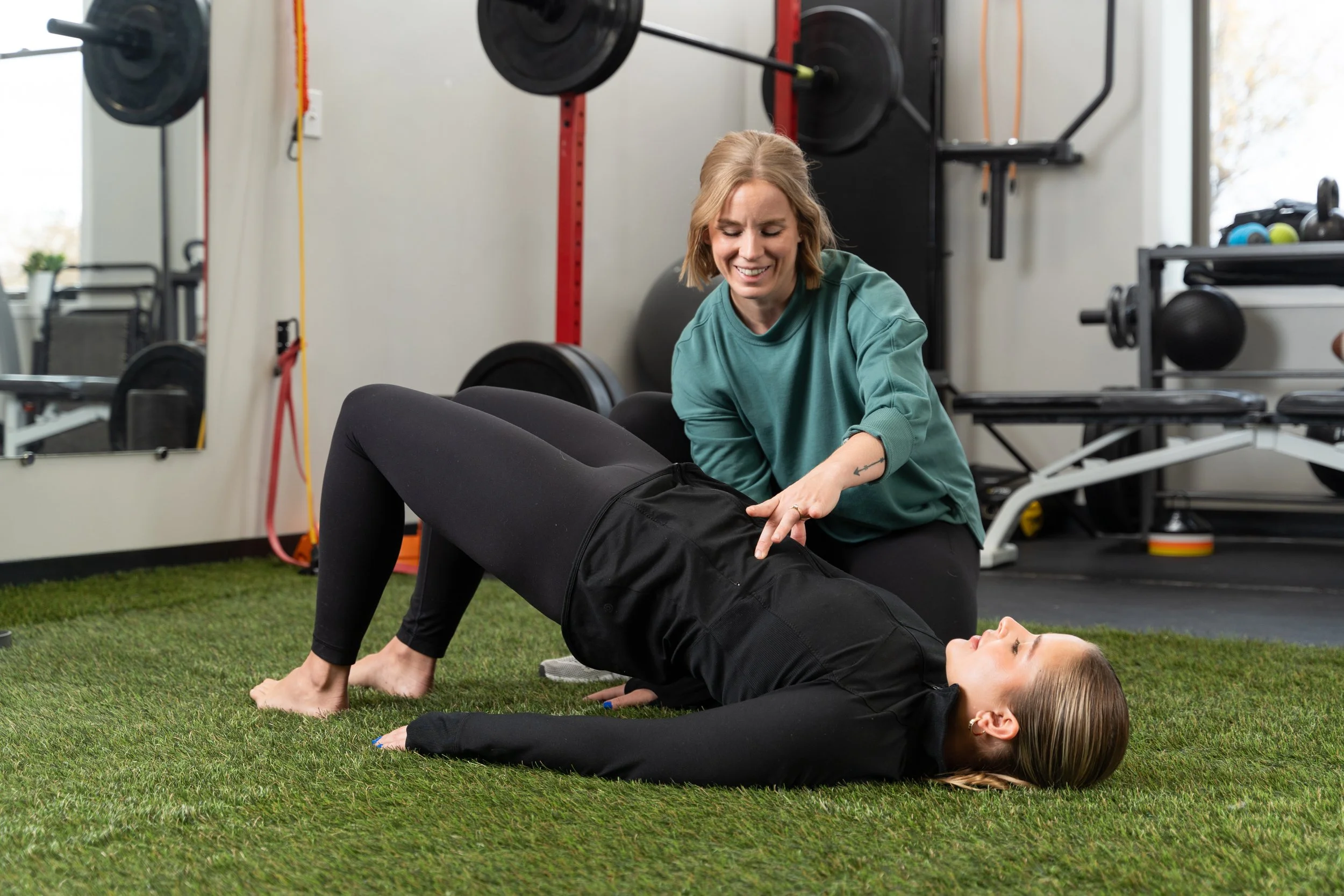
How Hamstring Injuries Actually Happen
Sprinting or accelerating too quickly
Overstriding Gait
Weak glutes (yes, we all love to blame glutes — but here it actually matters)
Asymmetries from past injuries - namely pelvis and muscular imbalances
Poor warm-up or mobility habits
Deadlifting or hinging with compensations
Rapid changes in training volume
Long-distance sitting (hi, commuters and desk workers)
A Quick Breakdown of Hamstring Strains
Grade I — Mild
Overstretching without tearing. Pain shows up with stairs, walking, or sitting. Strength usually fine.
Grade II — Moderate
Partial tear. Limping, soreness, weakness, and maybe bruising. Pain with contraction.
Grade III — Severe
Full-thickness tear. Possible “divot” in the muscle, lots of bruising, and yes — sometimes needing surgery to repair.
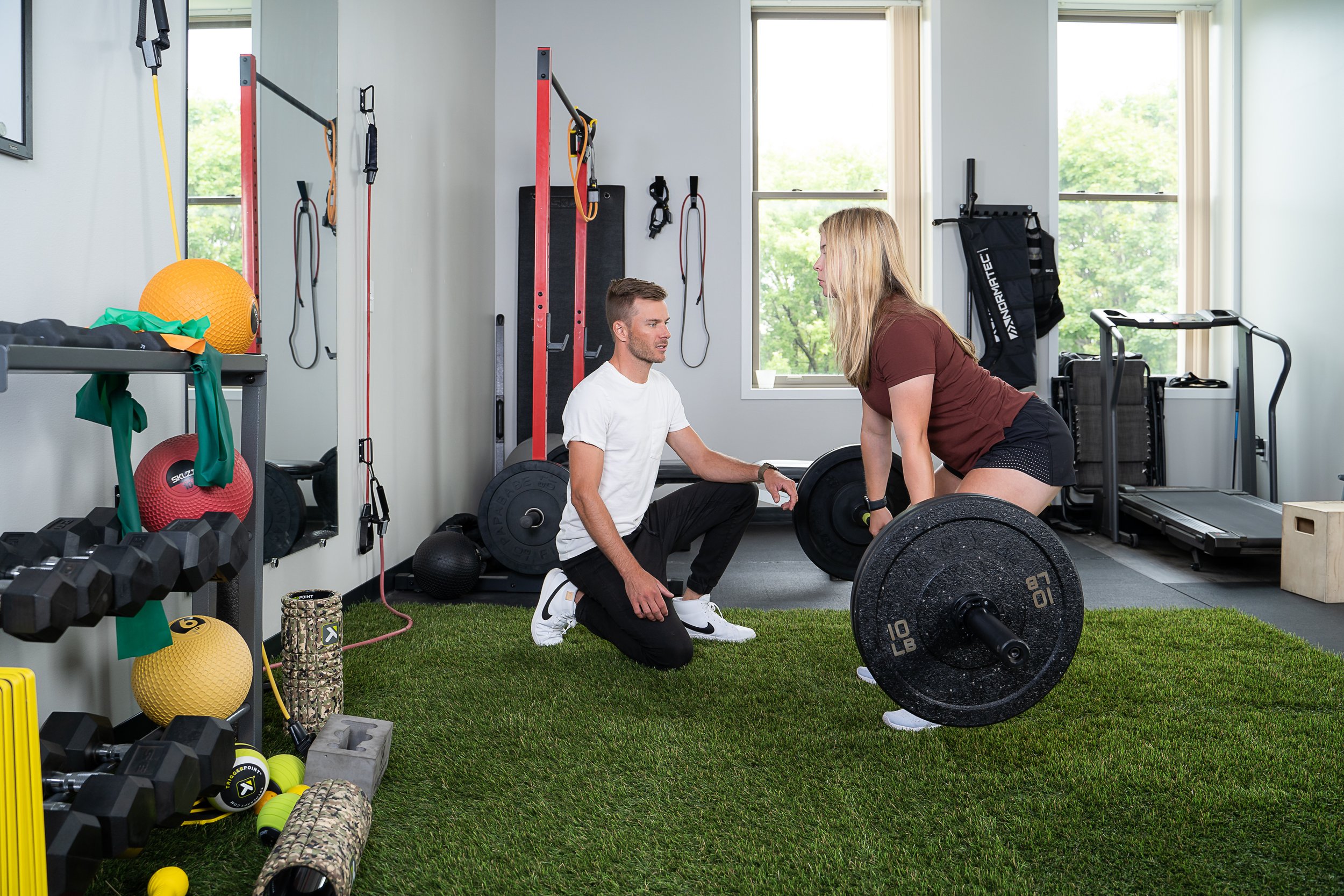
How We Treat Hamstring Pain
At Minnesota Movement Sport & Spine, treatment isn’t a generic “rest and stretch it.” We assess mechanics, strength imbalances, gait, sports demands — all of it.
Our treatment toolbox includes:
Active Release Technique (ART) to release deep adhesions
Manual Muscle Therapy for trigger points + tension
Functional Dry Needling to ease the muscular tension and/or promote healing into the tendon
Chiropractic Adjustments when hip or pelvic mechanics are part of the problem
Corrective Strength Work to address muscular imbalances
Isometrics for early pain reduction
Eccentric loading for tendon remodeling
Glute + hip strengthening (90% of hamstring issues start here)
RockTape for pain reduction + proprioceptive cueing
Recovery Timeline & Prognosis
Grade I strains:
2–3 weeks for athletes
4–6 weeks for general population
Grade II strains:
4–8 weeks depending on severity + load demands
Grade III tears:
8–12+ weeks, sometimes surgical referral
Tendonitis/Tendinopathy:
6–12 weeks depending on load tolerance and training demands
With proper rehab, most patients return to full strength — often stronger than before.
Let’s get moving!
If your hamstring is limiting your running, lifting, or game-day confidence, don’t wait for it to “calm down.” It won’t. Not without fixing the real issue.
Book your appointment today and let’s get you back to doing what your body was built to do.