Anterior Pelvic Tilt / Lower Crossed Syndrome
Is twerking still a thing?!
Anterior Pelvic tilt is kind of like that. In the most basic description, this Lower Crossed Syndrome is when the pelvis falls forwards and people end up walking around with their booty sticking out more - like twerking! Or kind of like that Instagram booty pose everyone is doing (not me!) Imagine someone trying to show off their belt buckle but also throwing their lumbar posture out of whack and the low back/hips/core muscles into a vicious cycle of chaos at the same time.
What is Anterior Pelvic Tilt or Lower Crossed Syndrome?
You know that feeling when your low back is constantly tight, your hips ache after sitting too long, and no amount of stretching seems to fix it? Yeah… that might not just be “getting older” — it could be Lower Crossed Syndrome (aka the lazy glutes + tight hip flexors combo). At Minnesota Movement, we see this all the time — from weekend warriors to high-level athletes.
The good news? This is totally fixable — and faster than you’d think. Whether it’s from sitting all day, training hard without mobility work, or just years of bad movement habits, we’ll help you figure out why your body got here and teach it how to move the right way again.
So if you’ve ever caught yourself wondering why your posture looks more “Instagram slouch” than “Olympic sprinter,” don’t worry — we’ve got you (and your pelvis) covered.
Typical signs of Lower Cross Syndrome include:
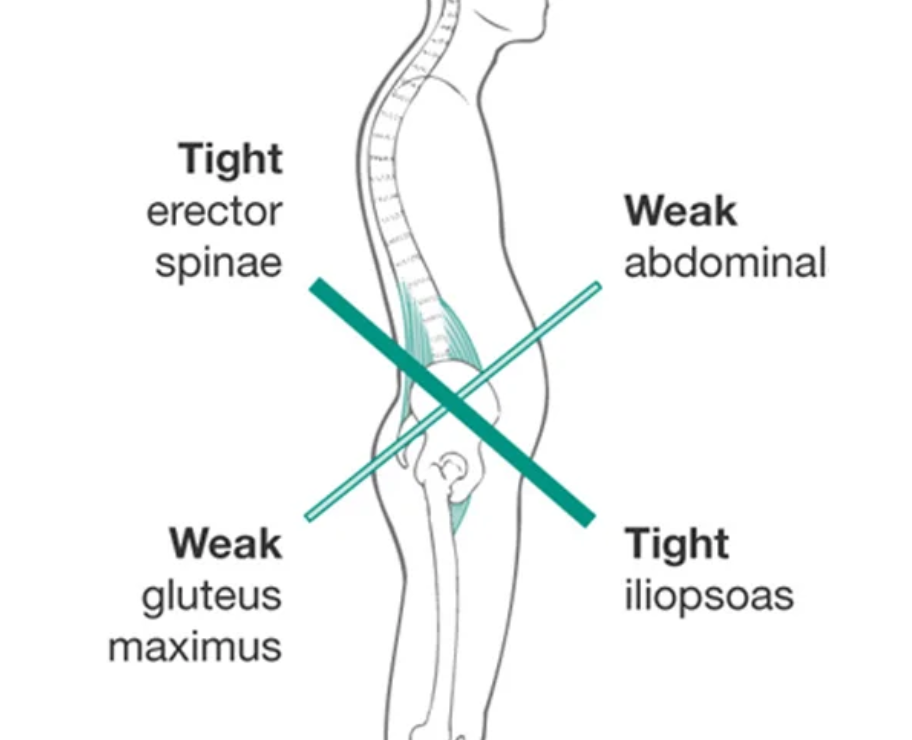
Tight low back muscles pulling the pelvis forward (increasing lumbar lordosis)
Tight or Taut Hip Flexors dragging the pelvis downward and forward
Weak or inactive abdominals unable to stabilize the pelvis
Weak or “sleepy” glutes that fail to activate properly during movement
For athletes, this can lead to chronic low back pain and tension, hamstring injuries, hip flexor strains, and decreased performance.
Symptoms & Related Conditions
Patients with Lower Cross Syndrome may experience:
Low back pain or stiffness (especially with standing or running)
Hip tightness and reduced flexibility
Hamstring or groin strains
Glute weakness and reduced athletic performance into Hip Extension
Postural fatigue or discomfort during workouts or daily activities
Other conditions that may overlap with or mimic Lower Cross Syndrome include:
Anterior pelvic tilt
Chronic hip flexor pain
Disc irritation or herniation
Sacroiliac (SI) joint dysfunction
How We Treat Lower Cross Syndrome at Minnesota Movement
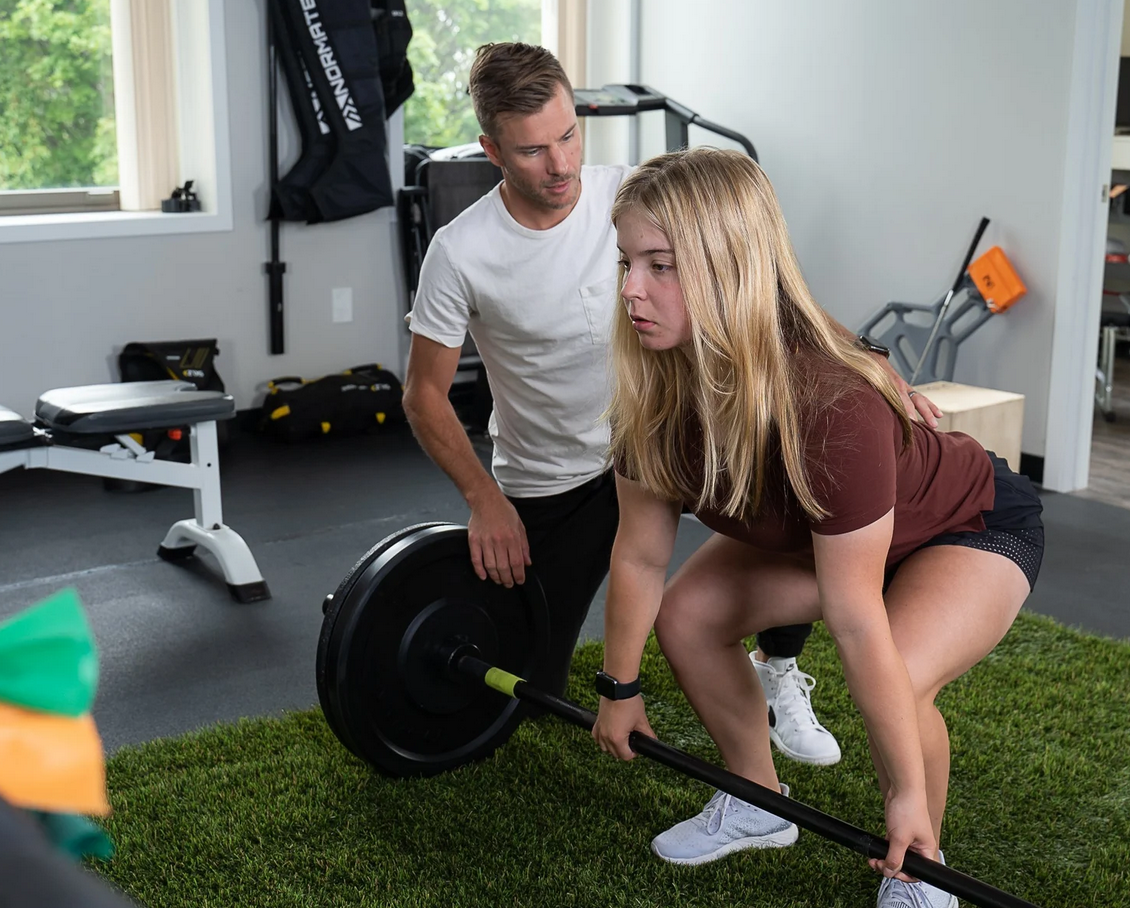
Our sports chiropractors don’t just address the pain — that’s the easy part. We aim to correct the root cause of the imbalance with a customized treatment and rehab plan designed for athletes and active individuals.
Our approach may include:
Chiropractic Adjustments to the pelvis and lumbar spine for improved alignment
Manual Muscle Therapy and Functional Dry Needling to release tension from overactive hip flexors and low back muscles
Instrument Assisted Soft Tissue Mobilization (IASTM) to break up possible adhesions and improve mobility
Kinesiology Taping (RockTape®) for postural cueing and support
Corrective Exercises to stabilize weak or ‘sleepy’ abdominals and glutes (with at-home programming sent via email!)
Functional Movement & Gait Assessment to identify faulty mechanics affecting performance
FAQs About Lower Cross Syndrome
Is Lower Cross Syndrome the same as anterior pelvic tilt?
They are closely related. Lower Cross Syndrome describes the muscular imbalances, while anterior pelvic tilt is the visible postural result.
Can Lower Cross Syndrome cause back pain?
Yes. The increased curve in the lumbar spine (hyperlordosis) often causes chronic low back pain, tension, stiffness, or even disc irritation.
How long does it take to fix?
With consistent chiropractic care, soft tissue therapy, and corrective exercise, many patients notice significant improvement within 4–8 weeks.
Patient Success Story:
“As a professional hockey player, I struggled with chronic low back tightness and hip pain - specifically with what I thought were ‘tight’ hamstrings. Dr. Reid at Minnesota Movement not only treated my pain but helped me fix my posture, find ways to help activate my glutes properly, and most importantly address the fact that my hamstrings were just long and weak. I feel a lot faster and more mobile playing and I’m eager to head into my 7th year stronger than ever.”
— Jordan G., Excelsior, MN
Get Relief from Lower Cross Syndrome in Lake Minnetonka
Don’t let postural imbalances keep you from training, performing, or enjoying an active lifestyle. At Minnesota Movement Sports Chiropractic in Excelsior, MN, we’ve helped countless athletes and professionals around Lake Minnetonka overcome Lower Cross Syndrome and related issues.
📍 Serving Excelsior, Minnetonka, Wayzata, Chanhassen, Deephaven, and surrounding areas
📞 Call us today at (651) 447-8898
👉 Schedule Your Appointment Online