
What is "Tech Neck?" / Upper Cross Syndrome
If your neck always feels tight, your shoulders sit forward, and headaches keep creeping in - it’s probably not “just stress” and nor was it likely caused by “sleeping wrong.”
It’s usually a pattern.
At Minnesota Movement Sports Chiropractic, we see this every day in athletes, executives, and anyone spending long hours at a desk or on their phone. It’s called Upper Cross Syndrome, and it’s one of the biggest drivers of chronic neck tension, poor posture, and recurring headaches.
We don’t just tell you to “sit up straight.”
We fix the reason your body can’t hold that position in the first place.
What Is Upper Cross Syndrome? (And Why It Matters)
Upper Cross Syndrome is a predictable pattern of muscle imbalance across your neck, shoulders, and upper back.
What’s Typically Tight / Overactive:
Upper trapezius & Levator scapulae (the ‘shrug’ muscles)
Pectoralis (chest muscles)
Suboccipital muscles (at the base of skull)
What’s Typically Weak / Underactive:
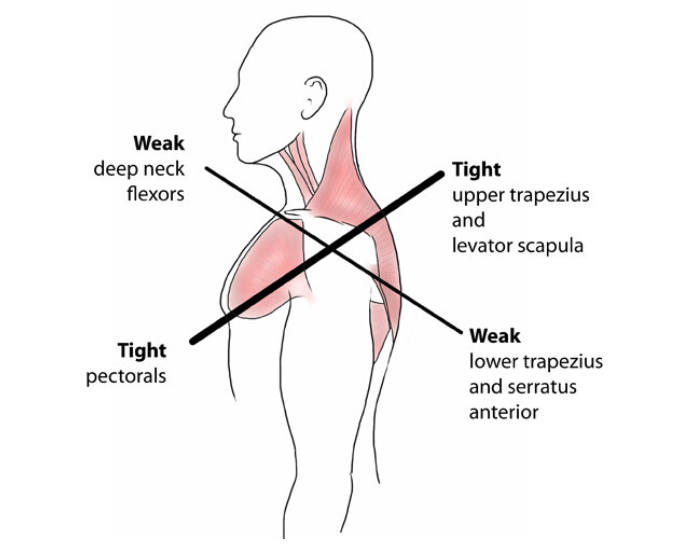
Deep neck flexors (think ‘double chin tucking’ muscles)
Lower trapezius and Rhomboids (muscles that pull the shoulder blades back)
Serratus anterior (these pull the shoulder blades into the rib cage)
This imbalance creates the classic posture of:
1. Forward head
2. Rounded shoulders
3. Tight neck
4. Poor shoulder mechanics
And over time… pain shows up.
Common Symptoms of Upper Cross Syndrome
Chronic neck tightness or stiffness
Tension headaches (especially at the base of the skull)
Shoulder blade discomfort or burning
Reduced shoulder mobility (especially overhead)
Jaw tension or TMJ irritation
Numbness or tingling into the arm (in more advanced cases)
What Causes Upper Cross Syndrome?
This doesn’t happen overnight. It’s a lifestyle + movement pattern issue.
Common drivers:
Long hours at a desk or laptop
Excessive phone use (“text neck”)
Poor gym programming (too much pressing, not enough pulling)
Lack of thoracic spine mobility
Weak scapular stabilizers
High stress → increased muscle tone in neck/shoulders
Athletes aren’t immune either - especially golfers, throwers, lifters, swimmers, and cyclists.
How We Treat Upper Cross Syndrome at Minnesota Movement
This is not a “quick adjustment and hope for the best” situation.
We’re retraining your entire upper body to move and stabilize correctly. Getting the right pieces to move at the right time.
Treatment May Include:
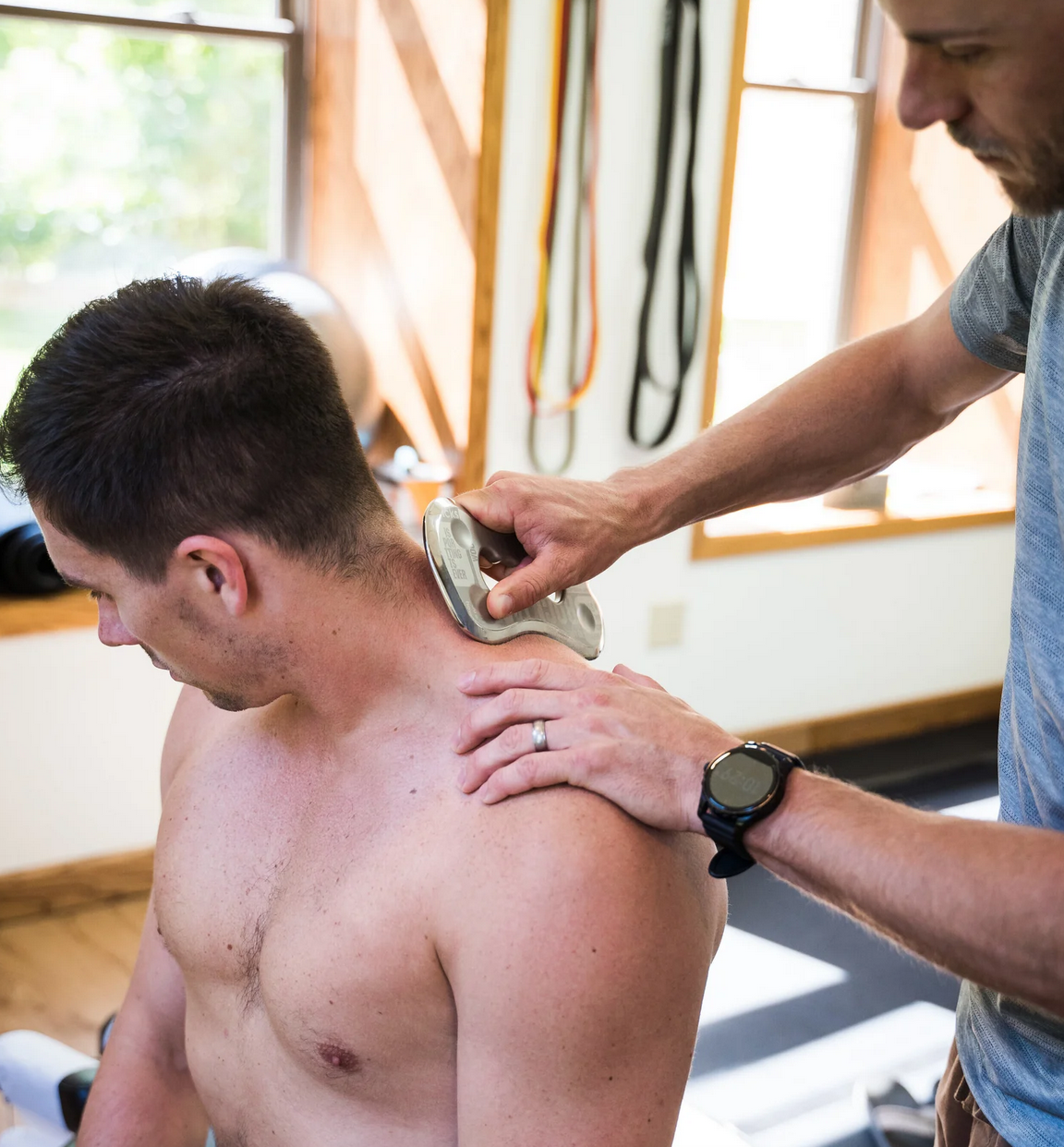
Manual Muscle Therapy (ART, RockBlades, IASTM) to reduce overactive muscles
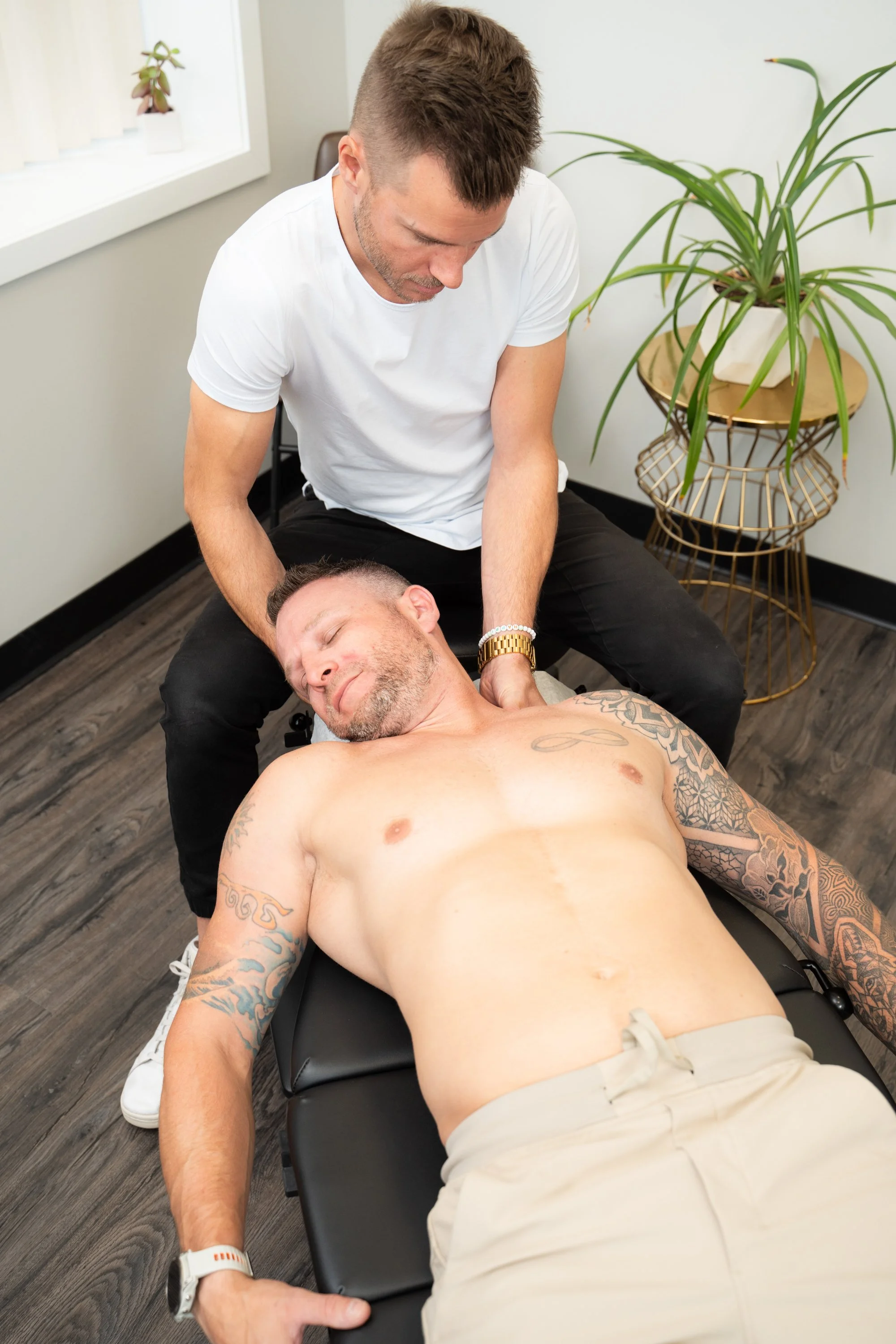
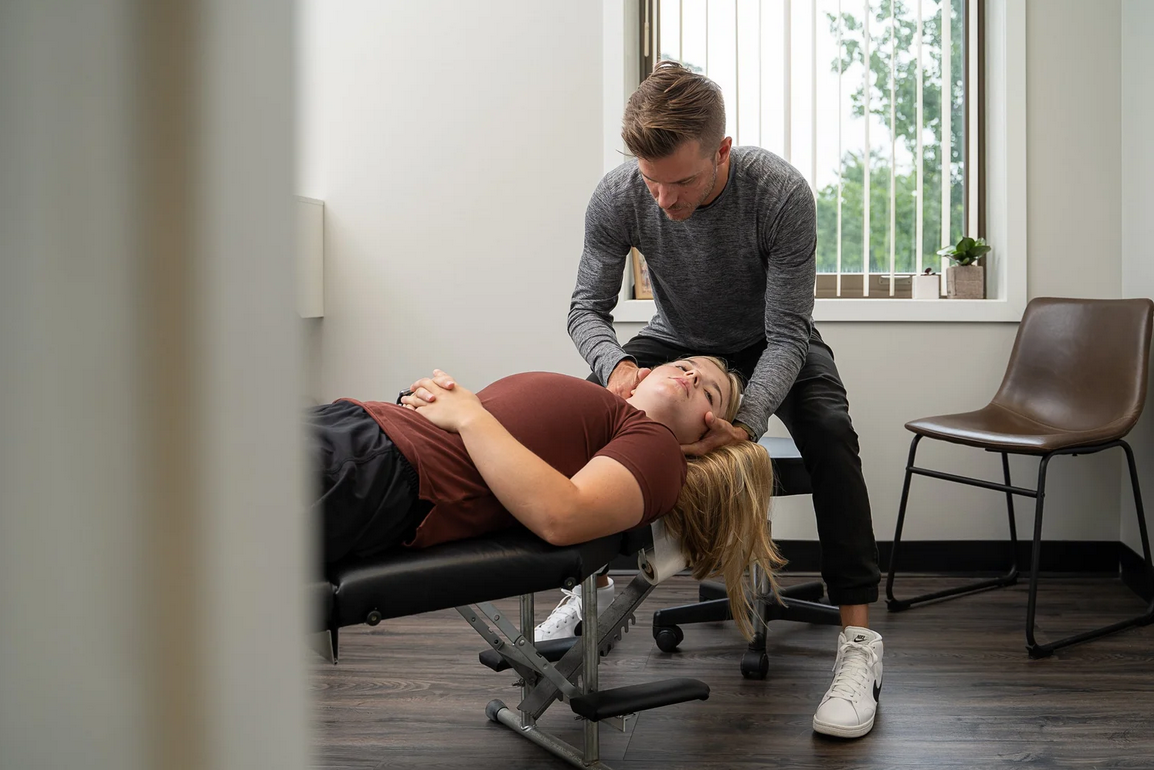
Chiropractic adjustments to cervical and thoracic spine (when warranted)
Postural re-education strategies such as workplace or desk ergonomics
Functional Dry Needling to tight muscles or to promote relaxation
Kinesiology taping (RockTape) for movement awareness
Targeted corrective exercise rehab this is where the magic happens! Re-educating the patterns that faltered in the first place.
Simple At-Home Exercises (High ROI)
Chin tucks (deep neck flexor activation)
Wall slides (serratus + scapular control)
Band pull-aparts (mid/lower trap activation)
Thoracic extensions over foam roller
Recovery Timeline & What to Expect
Mild cases: 3–6 weeks
Moderate postural issues: 6–10 weeks
Chronic / long-standing patterns: 10–16+ weeks
Here’s the truth most won’t say:
If you go back to 8+ hours/day of poor posture without addressing the necessary strength or stability work… it comes back.
Fix the pattern = fix the problem.
Why Patients Choose Minnesota Movement
We don’t chase symptoms in your neck.
We fix the system that’s creating them.
Patient Testimonial:
”After experiencing neck stiffness and constant pressure in my head, a friend of mine encouraged me to go see Dr. Reid Nelles. As a former professional athlete who has experienced treatment from some of the best sports chiropractors in the world, I must say that Dr. Reid truly lived up to my expectations. Immediate relief after one session, and fully back on track after two. Strongly recommend Minnesota Movement for anyone struggling with pain, injuries, or anything requiring treatment from an experienced professional!”
- David M. - Shorewood, MN - Retired NHL Athlete
Let’s Fix Your Posture Before It Becomes Chronic Pain