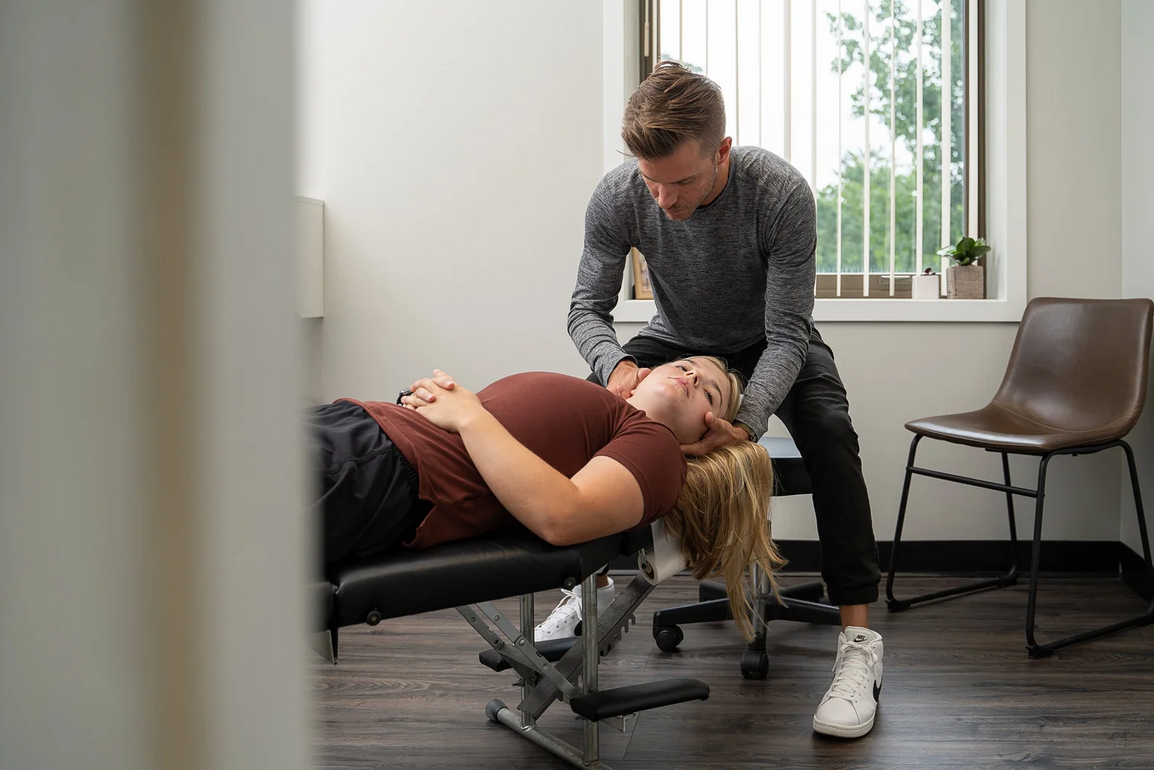

If your neck always feels tight, your shoulders sit forward, and headaches keep creeping in - it’s probably not “just stress” and nor was it likely caused by “sleeping wrong.”
It’s usually a pattern.
At Minnesota Movement, we see this every day in athletes, executives, and anyone spending long hours at a desk or on their phone. It’s called Upper Cross Syndrome, and it’s one of the biggest drivers of chronic neck tension, poor posture, and recurring headaches.
We don’t just tell you to “sit up straight.”
We fix the reason your body can’t hold that position in the first place.
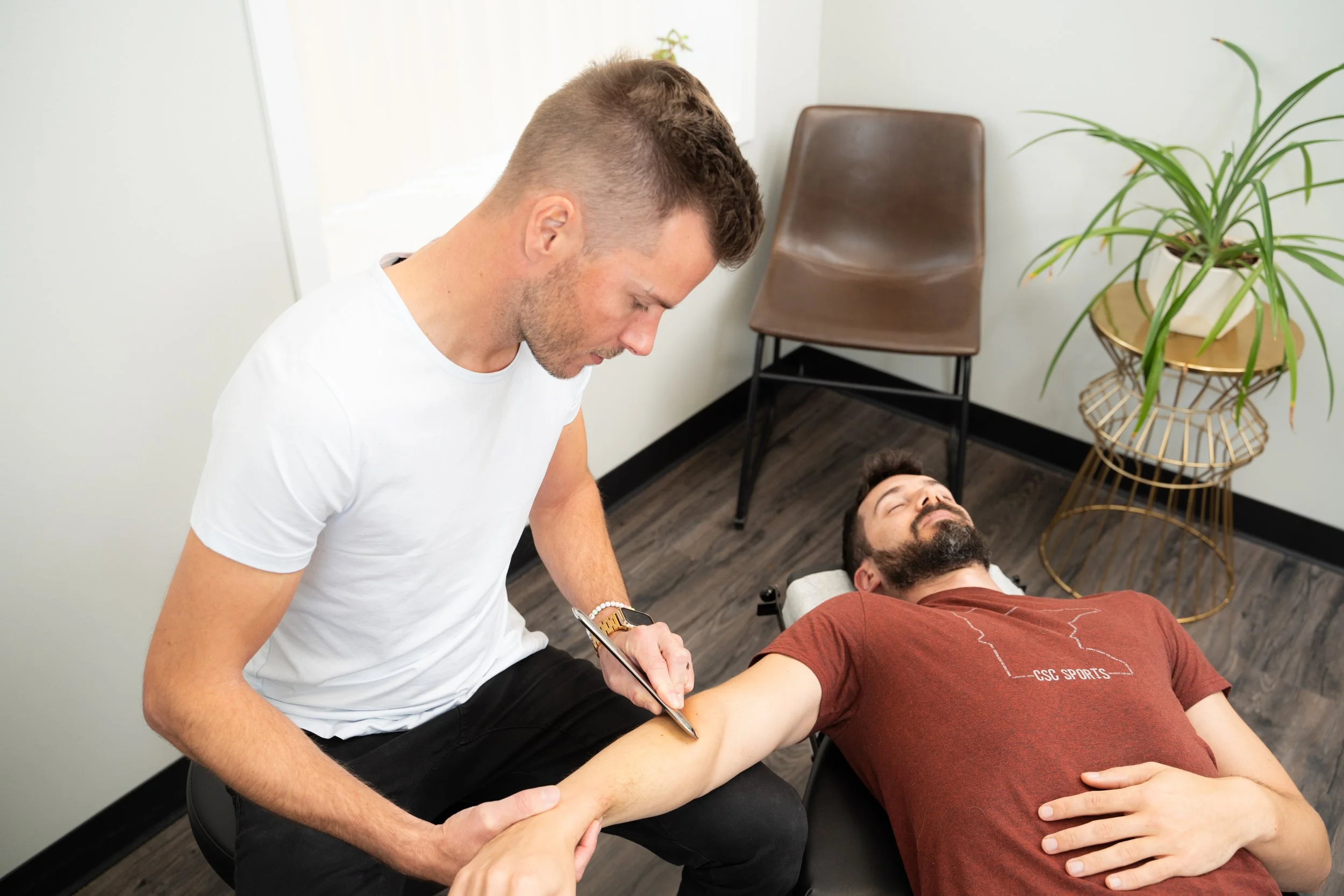
Tennis elbow — clinically known as lateral epicondylitis — is one of the most common overuse injuries we see in active adults, athletes, and high performers. Despite the name, you don’t need to touch a tennis (or pickleball) racket to develop it!
Tennis elbow occurs when the tendons that anchor the wrist and finger extensor muscles to the outside of the elbow are stressed beyond their capacity. Over time, this leads to irritation, micro-tearing, and eventually degeneration of the tendon tissue (epicondylosis) if left untreated.
Read MoreIf you play sports long enough, your neck is eventually going to hate you at some point. Between headers in soccer, wrestling takedowns, a bad fall on the ski hill, or that one pick-up basketball game where your buddy forgot how gravity works—athletes take some wild hits. And while “whiplash” sounds like a car-accident problem, the truth is this: sports create more neck sprains, concussions, and lingering headaches than half of the fender-benders happening in Minnesota.
Read MorePostural pain doesn’t care if you’re an athlete or a desk worker — it shows up when your body spends too much time in one position without the strength or mobility to support it.
After all, the only “bad” posture is one that we spend too much time in.
Sixty hours slouched at a desk will hurt you.
So will sixty hours standing without support.
The problem isn’t posture — it’s lack of variability and poor control.Changing posture takes intention, strategy, and real work — not temporary fixes like a new chair or a posture brace that collects dust after two weeks.
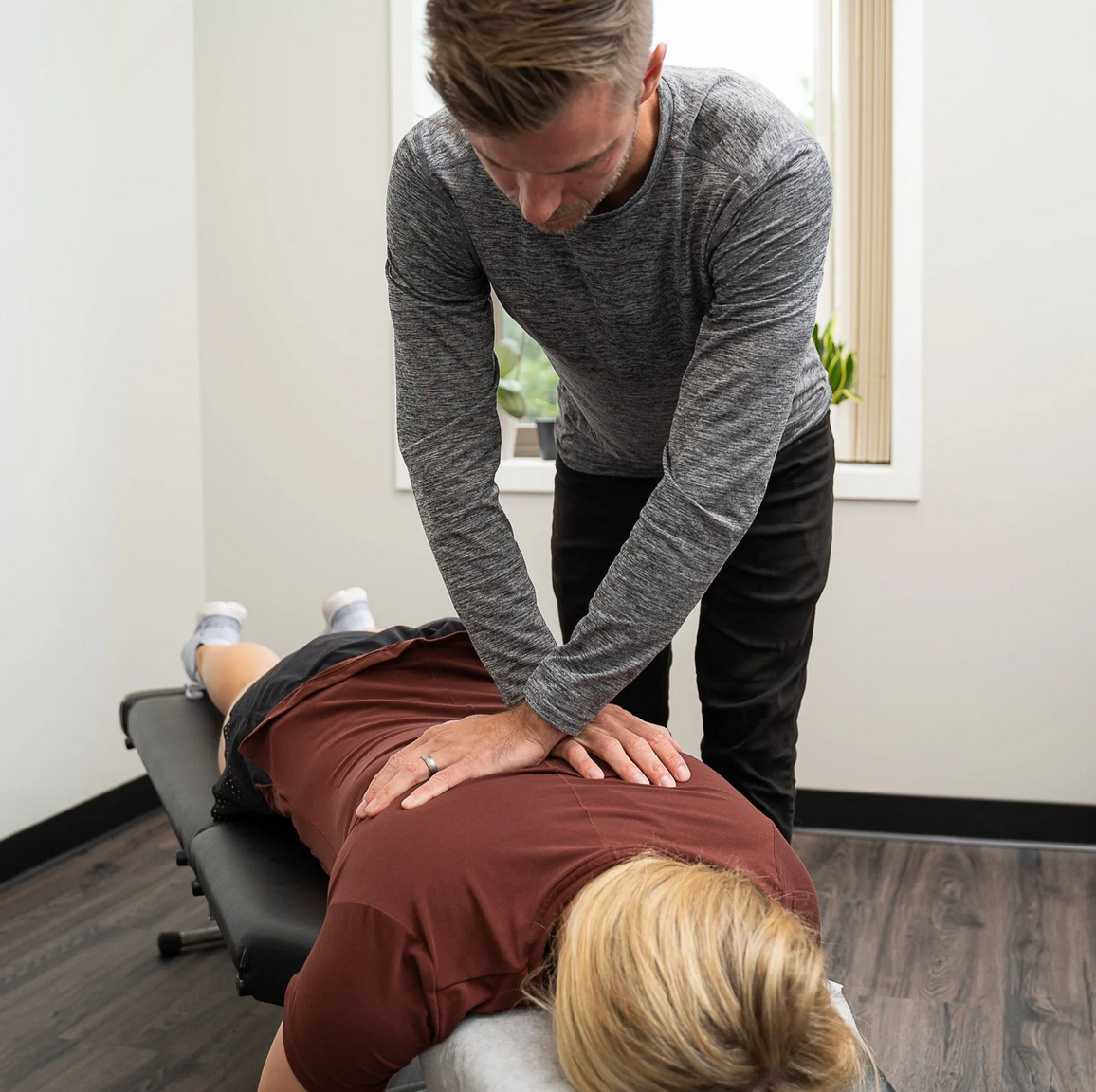
Low back pain is the #1 reason people seek chiropractic care nationwide—and it’s also the leading cause of complaints or disability in active adults. Translation: if you move, lift, train, ski, golf, or sit for a living… your low back is eventually going to complain. That doesn’t mean you’re broken! It means that you’re human.
Whether your pain came on suddenly during a lift, built up slowly from training volume, or showed up out of nowhere after years of desk work or daily movement, our approach blends hands-on chiropractic care, soft tissue work, and corrective exercise rehab to get you moving better—fast—and keep you there.
Read MoreYou don’t have to be the next Rory McIlroy or Serena Williams to end up with elbow tendonitis. We see golfers, tennis players, carpenters, desk workers, and even parents juggling babies all walk through our doors with the same complaint — a sharp, nagging pain on the inside or outside of the elbow that just won’t quit.
Our goal isn’t just to quiet the pain. It’s to fix why that tendon is angry in the first place — and build a stronger, more resilient arm that can handle whatever you throw at it (or swing, or type, or hammer).